Ben Bernanke
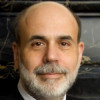
Ben Bernanke
Ben Shalom Bernankeis an American economist at the Brookings Institution who served two terms as chairman of the Federal Reserve, the central bank of the United States, from 2006 to 2014. During his tenure as chairman, Bernanke oversaw the Federal Reserve's response to the late-2000s financial crisis. Before becoming Federal Reserve chairman, Bernanke was a tenured professor at Princeton University and chaired the department of economics there from 1996 to September 2002, when he went on public service leave...
NationalityAmerican
ProfessionPolitician
Date of Birth13 December 1953
CityAugusta, GA
CountryUnited States of America
There is a deficit; I'd like to see it lowered. But it's up to Congress to decide whether that should be done by higher taxes, lower spending or some combination.
Under a paper-money system, a determined government can always generate higher spending and hence positive inflation,
I am going to begin now a practice of not making recommendations on specific tax and spending proposals.
Low marginal tax rates are supportive of economic growth. I would submit that we would want to look very hard at government spending - make sure it's controlled - before we raise taxes, which, in turn, would have negative impacts on the economy.
This necessary spending should not, however, jeopardize the president' long-term deficit-reduction goals.
impact on consumer spending and production broadly will be modest.
There are a number of institutions globally where the Federal Reserve typically leads the U.S. effort to work with financial regulators from other countries, and we try to, to the extent possible, establish international standards for how - the amount of capital a bank should hold, for example, or how much.
We're much more data-driven. We need to continually re-evaluate our forecasts and think about the prospects for the economy and make our decisions based on what the information is that's coming into our hands.
To say that the U.S. economy benefits from trade is not to say that every individual American worker or family benefits, or that the structural changes induced by trade are not disruptive,
to return to levels consistent with price stability in coming quarters.
To the extent that bank panics interfere with normal flows of credit, they may affect the performance of the real economy.
Of course, economic forecasts must be revised when new information arrives and are thus necessarily provisional.
Low and stable inflation in many countries is an important accomplishment that will continue to bring significant benefits.
I am particularly pleased to see that the Bendheim Center for Finance is thriving.