Baruch Spinoza
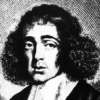
Baruch Spinoza
Baruch Spinozawas a Dutch philosopher of Sephardi/Portuguese origin. By laying the groundwork for the 18th-century Enlightenment and modern biblical criticism, including modern conceptions of the self and the universe, he came to be considered one of the great rationalists of 17th-century philosophy...
NationalityDutch
ProfessionPhilosopher
Date of Birth24 November 1632
real discovery mind
After experience had taught me that all the usual surroundings of social life are vain and futile; seeing that none of the objects of my fears contained in themselves anything either good or bad, except in so far as the mind is affected by them, I finally resolved to inquire whether there might be some real good having power to communicate itself, which would affect the mind singly, to the exclusion of all else: whether, in fact, there might be anything of which the discovery and attainment would enable me to enjoy continuous, supreme, and unending happiness.
reality men giving
But if men would give heed to the nature of substance they would doubt less concerning the Proposition that Existence appertains to the nature of substance: rather they would reckon it an axiom above all others, and hold it among common opinions. For then by substance they would understand that which is in itself, and through itself is conceived, or rather that whose knowledge does not depend on the knowledge of any other thing.
melancholy deaf realism
One and the same thing can at the same time be good, bad, and indifferent, e.g., music is good to the melancholy, bad to those who mourn, and neither good nor bad to the deaf.
realizing difficult
Everything great is just as difficult to realize as it is rare to find.
real liberty judgment
The real disturbers of the peace are those who, in a free state, seek to curtail the liberty of judgment which they are unable to tyrannize over.
reality perfection
Reality and perfection are synonymous.
gratitude real views
True knowledge of good and evil as we possess is merely abstract or general, and the judgment which we pass on the order of things and the connection of causes, with a view to determining what is good or bad for us in the present, is rather imaginary than real.
reality men may
It may easily come to pass that a vain man may become proud and imagine himself pleasing to all when he is in reality a universal nuisance.
giving-up real struggle
The more you struggle to live, the less you live. Give up the notion that you must be sure of what you are doing. Instead, surrender to what is real within you, for that alone is sure....you are above everything distressing.
bad good music neither nor time
One and the same thing can at the same time be good, bad, and indifferent, e.g., music is good to the melancholy, bad to those who mourn, and neither good nor bad to the deaf.
bad deaf good music neither nor
Music is good to the melancholy, bad to those who mourn, and neither good nor bad to the deaf
popular religion respect
Popular religion may be summed up as a respect for Ecclesiastes
cannot cause clearly events explained fixed follow human mean merely miracles natural nature ordinary reference relation
As nature preserves a fixed and immutable order; it must clearly follow that miracles are only intelligible as a relation to human opinions, and merely mean events of which the natural cause cannot be explained by a reference to any ordinary occurren
absence mere peace springs state virtue war
For peace is not mere absence of war, but is a virtue that springs from, a state of mind, a disposition for benevolence, confidence, justice.