Arthur Schopenhauer
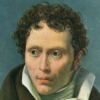
Arthur Schopenhauer
Arthur Schopenhauerwas a German philosopher. He is best known for his 1818 work The World as Will and Representation, in which he characterizes the phenomenal world as the product of a blind, insatiable, and malignant metaphysical will. Proceeding from the transcendental idealism of Immanuel Kant, Schopenhauer developed an atheistic metaphysical and ethical system that has been described as an exemplary manifestation of philosophical pessimism, rejecting the contemporaneous post-Kantian philosophies of German idealism. Schopenhauer was among the first thinkers in Western...
NationalityGerman
ProfessionPhilosopher
Date of Birth22 February 1788
CountryGermany
Every parting gives a foretaste of death; every coming together again a foretaste of the resurrection
With people of only moderate ability modesty is mere honesty; but with those who possess great talent it is hypocrisy
Everyone takes the limits of his own vision for the limits of the world.
As the biggest library if it is in disorder is not as useful as a small but well-arranged one, so you may accumulate a vast amount of knowledge but it will be of far less value than a much smaller amount if you have not thought it over for yourself.
Fame is something that must be won. Honor is something that must not be lost.
Every person takes the limits of their own field of vision for the limits of the world.
To marry is to halve your rights and double your duties.
There is something in us wiser than our head
Life is a ticklish business; I have resolved to spend it in reflecting upon it
There is in the world only the choice between loneliness and vulgarity. All young people should be taught now to put up with loneliness ... because the less man is compelled to come into contact with others, the better off he is.
Education perverts the mind since we are directly opposing the natural development of our mind by obtaining ideas first and observations last. This is why so few men of learning have such sound common sense as is quite common among the illiterate.
To desire immortality for the individual is really the same as wanting to perpetuate an error forever.
Nothing shocks our moral feelings so deeply as cruelty does. We can forgive every other crime, but not cruelty. The reason for this is that it is the very opposite of compassion.
For an act to be moral the intention must be based on compassion, not duty. We do something because we want to do it, because we feel we have to do it, not because we ought to do it. And even if our efforts fail - or we never even get to implement them - we are still moral because our motivation was based on compassion.