Anton Corbijn
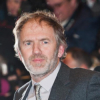
Anton Corbijn
Anton Johannes Gerrit Corbijn van Willenswaardis a Dutch photographer, music video director, and film director. He is the creative director behind the visual output of Depeche Mode and U2, having handled the principal promotion and sleeve photography for both bands for almost three decades. Some of his works include music videos for Depeche Mode's "Enjoy the Silence", U2's "One", Bryan Adams' "Do I Have to Say the Words? and Nirvana's "Heart-Shaped Box", as well as the Ian Curtis biographical film...
NationalityDutch
ProfessionPhotographer
Date of Birth20 May 1955
I never really enjoyed getting a portfolio together then sending it out; whereas, putting up the website is quite an enjoyable experience. The net's just a much faster and more modern way to distribute things, and you have to embrace it.
I work using the Brian Eno school of thinking: limit your tools, focus on one thing and just make it work… You become very inventive with the restrictions you give yourself.
For me N.M.E. was a very big thing. When I first came to the United Kingdom I started taking pictures for them and I became their main photographer for five years, and that's really been the basis of everything I've been doing since.
My life changed incredibly when I moved from Holland to England.
I feel that when I shoot anything, and I have something beautiful, I just move on.
It's only when people get involved, when there's money involved, that you have a lot opinions around you. I try not to listen to them too much.
I've done an incredible amount of painters. It's an area, for me, where there's more mystery left. I've photographed so many musicians, I've been in studios so often, I know the whole process. The mystery's gone from it. I think it's important to keep mystery into our lives. There's a longing connected with it.
Like stories, people have individual lives, and are all caught up in this murky thing. All of them have the best intentions. In that sense, you could just as easily tell the same story from another character's perspective. Maybe that's a good idea for a TV series.
I don't think I treat my film work as an extension of my photography. There are two different sets of rules there.
There's a lot about records that you cannot feel from a CD.
I don't have lights, I don't have assistants, I just go and meet somebody and take a photograph. That's really basic, and that's how I used to work when I was 17 or 18 in Holland.
Sometimes you don't know if your memory is because you really experienced it or because you look at your old pictures. I have a nice picture of myself held up by my grandfather and my father standing next to me. We all have the same name - we're all called Anton Corbijn. That's something I cherish.
Body language is so important, as is composition. You can not say something, and then the body reacts, and it says a lot of things dialogue can also say.
My photography is very European. In America, I always get the sense that people are comforted by understanding what they're looking at. Photography's quite clear here [in the U.S.], it's very well-explained. My photography's perhaps not as well-explained.