Antoine Lavoisier
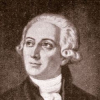
Antoine Lavoisier
Antoine-Laurent de Lavoisierwas a French nobleman and chemist central to the 18th-century chemical revolution and had a large influence on both the history of chemistry and the history of biology. He is widely considered in popular literature as the "father of modern chemistry"...
NationalityFrench
ProfessionScientist
Date of Birth26 August 1743
CityParis, France
CountryFrance
oxygen water hydrogen
It required 85 parts by weight of oxygen and 15 parts of hydrogen to compose 100 parts of water.
oxygen claims theory
This theory [the oxygen theory] is not as I have heard it described, that of the French chemists, it is mine (elle est la mienne); it is a property which I claim from my contemporaries and from posterity.
oxygen sulfur weight
Sulfur, when burning, absorbs oxygen gas; the resulting acid is considerably heavier than the sulfur burned; its weight is equal to the sum of weights of the sulfur burned and the oxygen absorbed.
boiling carbon degree forming higher hydrogen oxygen slightly
The least degree of heat, as long as it is slightly higher than boiling water, suffices for uniting oxygen and hydrogen and carbon and for forming oil and water.
blood cannot compensate constantly form losses material nature rejected taking
One part is absorbed in the blood to compensate for the losses that are constantly taking place through respiration and perspiration, and all the material that Nature cannot use is rejected in the form of excrement.
air analysis deny great knowledge metals nature numbers precise theory
One will not deny me, I trust, all the theory of oxidation and combustion, the analysis and decomposition of air by metals and combustible bodies, the theory of acidification, more precise knowledge on the nature of a great numbers of acids, notably
advanced almost base began constantly facts infancy modern others practical science short statesman theory
Like almost all others began with metaphysical discussions. The theory has advanced but the practical science is still in its infancy and the modern statesman is constantly short of facts on which he can base his speculations.
affecting against crowd easily enthusiasm groups hope human large leading men passions sage seize sweeping whirlwind
Let us hope especially that the enthusiasm and exaggerations, which so easily seize men congregated in large groups - affecting human passions and leading the crowd against its own interest, sweeping up in their whirlwind the sage and philosopher as
dangerous fair health necessary occupation order pay peace prisoners reasonable regular work
It is only fair that prisoners work to pay for at least a part of their food. A regular and reasonable occupation is necessary for their health as well as for maintaining peace and order and for banishing idleness, more dangerous in these sanctuaries
ideas three branches
The impossibility of separating the nomenclature of a science from the science itself, is owing to this, that every branch of physical science must consist of three things; the series of facts which are the objects of the science, the ideas which represent these facts, and the words by which these ideas are expressed. Like three impressions of the same seal, the word ought to produce the idea, and the idea to be a picture of the fact.
science light air
In every combustion there is disengagement of the matter of fire or of light. A body can burn only in pure air [oxygen]. There is no destruction or decomposition of pure air and the increase in weight of the body burnt is exactly equal to the weight of air destroyed or decomposed. The body burnt changes into an acid by addition of the substance that increases its weight. Pure air is a compound of the matter of fire or of light with a base. In combustion the burning body removes the base, which it attracts more strongly than does the matter of heat, which appears as flame, heat and light.
believe flower color
Experiments upon vegetation give reason to believe that light combines with certain parts of vegetables, and that the green of their leaves, and the various colors of flowers, is chiefly owing to this combination.
avid glory young
I am young and avid for glory.
self-confidence imagination self-love
Imagination, on the contrary, which is ever wandering beyond the bounds of truth, joined to self-love and that self-confidence we are so apt to indulge, prompt us to draw conclusions which are not immediately derived from facts.