Andrew Carnegie
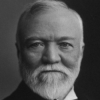
Andrew Carnegie
Andrew Carnegiewas a Scottish-American industrialist who led the enormous expansion of the American steel industry in the late 19th century. He is often identified as one of the richest people in history, alongside John D. Rockefeller and Jakob Fugger. He built a leadership role as a philanthropist for the United States and the British Empire. During the last 18 years of his life, he gave away to charities, foundations, and universities about $350 million– almost 90 percent of his fortune...
NationalityScottish
ProfessionEntrepreneur
Date of Birth25 November 1835
CityDunfermline, Scotland
Here is the prime condition of success: Concentrate your energy, thought and capital exclusively upon the business in which you are engaged. Having begun on one line, resolve to fight it out on that line, to lead in it, adopt every improvement, have the best machinery, and know the most about it.
The men who have succeeded are men who have chosen one line and stuck to it.
The best time to expand is when no one else dares to take risks
One great cause of failure of young men in business is the lack of concentration.
Success can be attained in any branch of labor. There’s always room at the top in every pursuit.
Immense power is acquired by assuring yourself in your secret reveries that you were born to control affairs.
Think of yourself as on the threshold of unparalleled success. A whole, clear, glorious life lies before you. Achieve! Achieve!
Watch the costs and the profits will take care of themselves.
Concentration is my motto - first honesty, then industry, then concentration.
There is no use whatsoever in trying to help people who do not help themselves.
Do not think a man has done his full duty when he has performed the work assigned him. A man will never rise if he does only this. Promotion comes from exceptional work.
It marks a big step in your development when you come to realize that other people can help you do a better job than you could do alone.
The day is not far distant when the man who dies leaving behind him millions of available wealth, which was free for him to administer during life, will pass away unwept, unhonored, and unsung, no matter to what uses he leave the dross which he cannot take with him. Of such as these the public verdict will then be: The man who dies thus rich dies disgraced. Such, in my opinion, is the true gospel concerning wealth, obedience to which is destined some day to solve the problem of the rich and the poor.
The greatest astonishment of my life was the discovery that the man who does the work is not the man who gets rich