Ambrose Bierce
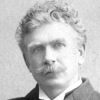
Ambrose Bierce
Ambrose Gwinnett Biercewas an American editorialist, journalist, short story writer, fabulist, and satirist. He wrote the short story "An Occurrence at Owl Creek Bridge" and compiled a satirical lexicon, The Devil's Dictionary. His vehemence as a critic, his motto "Nothing matters", and the sardonic view of human nature that informed his work, all earned him the nickname "Bitter Bierce"...
NationalityAmerican
ProfessionNovelist
Date of Birth24 June 1842
CityMeighs County, OH
CountryUnited States of America
INTERPRETER, n. One who enables two persons of different languages to understand each other by repeating to each what it would have been to the interpreter's advantage for the other to have said.
PALM, n. A species of tree . . . of which the familiar "itching palm" ("Palma hominis") is most widely distributed . . . . This noble vegetable exudes a kind of invisible gum, which may be detected by applying to the bark a piece of gold or silver.
WEATHER, n. The climate of an hour. A permanent topic of conversation among persons whom it does not interest, but who have inherited the tendency to chatter about it from naked arboreal ancestors whom it keenly concerned. The setting up of official weather bureaus and their maintenance in mendacity prove that even governments are accessible to suasion by the rude forefathers of the jungle.
Opposition, n. In politics the party that prevents the government from running amuck by hamstringing it.
ENOUGH, pro. All there is in the world if you like it.
DELUGE, n. A notable first experiment in baptism which washed away the sins (and sinners) of the world.
RUMOR, n. A favorite weapon of the assassins of character.
IMPALE, v.t. In popular usage, to pierce with any weapon which remains fixed in the wound . . . . properly, to put to death by thrusting an upright sharp stake into the body, the victim being left in a sitting position.
CAVILER, n. A critic of our own work.
CONGRESS, n. A body of men who meet to repeal laws.
PALACE, n. A fine and costly residence, particularly that of a great official. The residence of a high dignitary of the Christian Church is called a palace; that of the Founder of his religion was known as a field, or wayside. There is progress.
JOSS-STICKS- Small sticks burned by the Chinese in their pagan tomfoolery, in imitation of certain sacred rites of our holy religion.
MONSIGNOR- A high ecclesiastical title, of which the Founder of our religion overlooked the advantages.
INADMISSIBLE- Not competent to be considered. Hearsay evidence is inadmissible ... but there is no religion in the world that has any other basis than hearsay evidence.