Alexander Hamilton
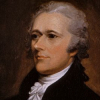
Alexander Hamilton
Alexander Hamiltonwas a Founding Father of the United States, chief staff aide to General George Washington, one of the most influential interpreters and promoters of the U.S. Constitution, the founder of the nation's financial system, the founder of the Federalist Party, the world's first voter-based political party, the founder of the United States Coast Guard, and the founder of The New York Post newspaper. As the first Secretary of the Treasury, Hamilton was the primary author of the economic policies...
NationalityAmerican
ProfessionPolitician
Date of Birth11 January 1757
CountryUnited States of America
Experience is the oracle of truth; and where its responses are unequivocal, they ought to be conclusive and sacred.
I never expect to see a perfect work from an imperfect man.
We must make the best of those ills which cannot be avoided.
Common interest may always be reckoned upon as the surest bond of sympathy.
No man in his senses can hesitate in choosing to be free, rather than a slave.
[H]owever weak our country may be, I hope we shall never sacrifice our liberties.
A national debt, if it is not excessive, will be to us a national blessing.
A fondness for power is implanted in most men, and it is natural to abuse it when acquired.
If the federal government should overpass the just bounds of its authority and make a tyrannical use of its powers, the people, whose creature it is, must appeal to the standard they have formed, and take such measures to redress the injury done to the Constitution as the exigency may suggest and prudence justify.
Give all the power to the many, they will oppress the few. Give all the power to the few, they will oppress the many.
Men often oppose a thing merely because they have had no agency in planning it, or because it may have been planned by those whom they dislike.
A nation which can prefer disgrace to danger is prepared for a master, and deserves one.
Safety from external danger is the most powerful director of national conduct. Even the ardent love of liberty will, after a time, give way to its dictates. The violent destruction of life and property incident to war, the continual effort and alarm attendant on a state of continual danger, will compel nations the most attached to liberty to resort for repose and security to institutions which have a tendency to destroy their civil and political rights. To be more safe, they at length become willing to run the risk of being less free.
Take mankind as they are, and what are they governed by? Their passions.