Albert Camus
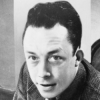
Albert Camus
Albert Camus; 7 November 1913 – 4 January 1960) was a French philosopher, author, and journalist. His views contributed to the rise of the philosophy known as absurdism. He wrote in his essay The Rebel that his whole life was devoted to opposing the philosophy of nihilism while still delving deeply into individual freedom. He won the Nobel Prize in Literature in 1957...
NationalityFrench
ProfessionNovelist
Date of Birth7 November 1913
CountryFrance
happiness happy laughter
To be happy we must not be too concerned with others.
country justice able
I should like to be able to love my country and still love justice.
knowledge responsibility intelligent
An intellectual is someone whose mind watches itself.
believe artist world
In a world that has ceased to believe in sin, the artist is responsible for the preaching.
writing writers-and-writing reader
Those who write clearly have readers.
heroism difficult
Heroism is accessible. Happiness is more difficult.
wind police revolution
Revolt and revolution both wind up at the same crossroads: the police, or folly.
secret faces great-work
Every great work makes the human face more admirable and richer, and that is its whole secret.
grief men justice
Against eternal injustice, man must assert justice, and to protest against the universe of grief, he must create happiness.
4th-of-july media be-good
A free press can, of course, be good or bad, but, most certainly without freedom, the press will never be anything but bad.
struggle heart night
I leave Sisyphus at the foot of the mountain. One always finds one's burden again. But Sisyphus teaches the higher fidelity that negates the gods and raises rocks. He too concludes that all is well. This universe henceforth without a master seems to him neither sterile nor futile. Each atom of that stone, each mineral flake of that night-filled mountain, in itself, forms a world. The struggle itself toward the heights is enough to fill a man's heart. One must imagine Sisyphus happy.
life time men
If, after all, men cannot always make history have a meaning, they can always act so that their own lives have one.
evil history historical
Purely historical thought is nihilistic; it wholeheartedly accepts the evil of history.
life goodness incorrigible
There can be no true goodness, nor true love, without the utmost clear-sightedness.