Alan Alda
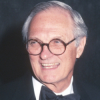
Alan Alda
Alan Aldais an American actor, director, screenwriter, and author. A six-time Emmy Award and Golden Globe Award winner, he is widely known for his roles as Captain Hawkeye Pierce in the TV series M*A*S*H and Arnold Vinick in The West Wing. He has also appeared in many feature films, most notably in Crimes and Misdemeanorsas pretentious television producer Lester and in The Aviatoras U.S. Senator Owen Brewster, the latter of which earned him a nomination for the Academy Award for...
NationalityAmerican
ProfessionTV Actor
Date of Birth28 January 1936
CityNew York City, NY
CountryUnited States of America
The one thing I think I've noticed about shows that are supposed to be funny on television is that they've sort of become routinized, so there's an awful lot of mannerisms and joke lines that are sort of there to trigger laughter, rather than give actors a chance to play a moment.
Achingly funny as it was, Larry Gelbart's writing gave off sparks that turned a hard light on the way we are.
It isn't necessary to be rich and famous to be happy. It's only necessary to be rich.
What's funny is that you can think you really value your life until you almost lose it.
It's a funny feeling to work with people who you consider your colleagues and to realize that they actually are young enough to be your children.
Awards shows mainly publicize the people giving the awards.
Any play is hard to write, and plays are getting harder and harder to get on the stage.
All I've ever tried to do is play real people.
Anyone I know who's almost died has come out of it, at least for a while, looking at things differently.
The whole question of fiduciary responsibility is a very old concept. You could make a movie about someone making that rule at any point in history, and within a few months, it will turn out to be timely.
The thing is when you're... well-enough known, you get asked to speak places, and they don't really think about whether or not you're qualified. They just want somebody that will be a drawing card for the audience. So it's up to you to decide whether or not it's foolish to get up and speak to these people.
If scientists can't communicate with the public, with policy makers, with one another, the future is going to be held back. We're not going to have the future that we could have.
I would like to know that when I read the paper in the morning, it's telling me something that actually happened, and I think the vast majority of journalists want the same thing.
I sat next to a young woman on a plane once who bombarded me for five hours with how she had decided to be born again and so should I. I told her I was glad for her, but I hadn't used up being born the first time.