Abraham Maslow
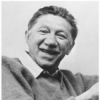
Abraham Maslow
Abraham Harold Maslowwas an American psychologist who was best known for creating Maslow's hierarchy of needs, a theory of psychological health predicated on fulfilling innate human needs in priority, culminating in self-actualization. Maslow was a psychology professor at Alliant International University, Brandeis University, Brooklyn College, New School for Social Research, and Columbia University. He stressed the importance of focusing on the positive qualities in people, as opposed to treating them as a "bag of symptoms." A Review of General Psychology...
NationalityAmerican
ProfessionScientist
Date of Birth1 April 1908
CityBrooklyn, NY
CountryUnited States of America
Abraham Maslow quotes about
To objectify our subjective thought so as to be able to look at it and improve it toward perfection. To seek peak experiences.
What shall we think of a well-adjusted slave?
We fear to know the fearsome and unsavory aspects of ourselves, but we fear even more to know the godlike in ourselves.
We may define therapy as a search for value.
Laugh at what you hold sacred, and still hold it sacred.
One's only failure is failing to live up to one's own possibilities.
What conditions of work, what kinds of work, what kinds of management, and what kinds of reward or pay will help human stature to grow healthy, to its fuller and fullest stature ? Classic economic theory, based as it is on an inadequate theory of hum
I have come to think of this humanist trend in psychology as a revolution in the truest, oldest sense of the word; the sense in which Galileo, Darwin, Einstein, Freud and Marx made revolutions, i.e. new ways of perceiving and thinking, new images of
I can feel guilty about the past, apprehensive about the future, but only in the present can I act. The ability to be in the present moment is a major component of mental wellness.
When the only tool you own is a hammer, every problem begins to resemble a nail.
Religion becomes. a state of mind achievable in almost any activity of life, if this activity is raised to a suitable level of perfection.
Man is ultimately not molded or shaped into humanness. The environment does not give him potentialities and capacities; he has them in inchoate or embryonic form, just exactly as he has embryonic arms and legs. And creativeness, spontaneity, selfhood
I have learned the novice can often see things that the expert overlooks. All that is necessary is not to be afraid of making mistakes, or of appearing naive.
White-Headed Chief was wealthy, even though he owned nothing. In what way did virtue pay ? The men who were formally generous in this way were the most admired, most respected, and the most loved men in the tribe. These were the men who benefited the