William Osler
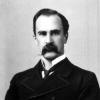
William Osler
Sir William Osler, 1st Baronet, FRS, FRCPwas a Canadian physician and one of the four founding professors of Johns Hopkins Hospital. Osler created the first residency program for specialty training of physicians, and he was the first to bring medical students out of the lecture hall for bedside clinical training. He has frequently been described as the "Father of Modern Medicine". Osler was a person of many interests, who in addition to being a physician, was a bibliophile, historian, author,...
NationalityCanadian
ProfessionDoctor
Date of Birth12 July 1849
CountryCanada
A man is sane morally at thirty, rich mentally at forty, wise spiritually at fifty-or never!
Look wise, say nothing, and grunt. Speech was given to conceal thought.
The practice of medicine is an art, not a trade; a calling, not a business; a calling in which your heart will be exercised equally with your head. Often the best part of your work will have nothing to do with potions and powders, but with the exercise of an influence of the strong upon the weak, of the righteous upon the wicked, of the wise upon the foolish.
To it, more than to anything else, I owe whatever success I have had -- to this power of settling down to the day's work and trying to do it to the best of one's ability, and letting the future take care of itself.
To die daily, after the manner of St. Paul, ensures the resurrection of a new man, who makes each day the epitome of life.
When schemes are laid in advance, it is surprising how often the circumstances fit in with them
One finger in the throat and one in the rectum makes a good diagnostician.
There are no straight backs, no symmetrical faces, many wry noses, and no even legs. We are a crooked and perverse generation.
To know what has to be done, then do it, comprises the whole philosophy of practical life.
The natural man has only two primal passions, to get and to beget.
To study the phenomena of disease without books is to sail an uncharted sea, while to study books without patients is not to go to sea at all.
The first duties of the physician is to educate the masses not to take medicine.
The best preparation for tomorrow is to do today's work superbly well.
In science the credit goes to the man who convinces the world, not to the man to whom the idea first occurs.