William Osler
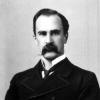
William Osler
Sir William Osler, 1st Baronet, FRS, FRCPwas a Canadian physician and one of the four founding professors of Johns Hopkins Hospital. Osler created the first residency program for specialty training of physicians, and he was the first to bring medical students out of the lecture hall for bedside clinical training. He has frequently been described as the "Father of Modern Medicine". Osler was a person of many interests, who in addition to being a physician, was a bibliophile, historian, author,...
NationalityCanadian
ProfessionDoctor
Date of Birth12 July 1849
CountryCanada
The great minds, the great works transcend all limitations of time, of language, and of race, and the scholar can never feel initiated into the company of the elect until he can approach all of life's problems from the cosmopolitan standpoint.
To have a group of cloistered clinicians away completely from the broad current of professional life would be bad for teacher and worse for student. The primary work of a professor of medicine in a medical school is in the wards, teaching his pupils how to deal with patients and their diseases.
No bubble is so iridescent or floats longer than that blown by the successful teacher.
To it, more than to anything else, I owe whatever success I have had -- to this power of settling down to the day's work and trying to do it to the best of one's ability, and letting the future take care of itself.
To die daily, after the manner of St. Paul, ensures the resurrection of a new man, who makes each day the epitome of life.
When schemes are laid in advance, it is surprising how often the circumstances fit in with them
One finger in the throat and one in the rectum makes a good diagnostician.
There are no straight backs, no symmetrical faces, many wry noses, and no even legs. We are a crooked and perverse generation.
To know what has to be done, then do it, comprises the whole philosophy of practical life.
The natural man has only two primal passions, to get and to beget.
To study the phenomena of disease without books is to sail an uncharted sea, while to study books without patients is not to go to sea at all.
The first duties of the physician is to educate the masses not to take medicine.
The best preparation for tomorrow is to do today's work superbly well.
In science the credit goes to the man who convinces the world, not to the man to whom the idea first occurs.