Wesley Clark
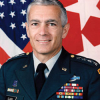
Wesley Clark
Wesley Kanne Clark, Sr.is a retired General of the United States Army. He graduated as valedictorian of the class of 1966 at West Point and was awarded a Rhodes Scholarship to the University of Oxford, where he obtained a degree in Philosophy, Politics and Economics. He later graduated from the Command and General Staff College with a master's degree in military science. He spent 34 years in the Army, receiving many military decorations, several honorary knighthoods, and the Presidential Medal...
NationalityAmerican
ProfessionWar Hero
Date of Birth23 December 1944
CityChicago, IL
CountryUnited States of America
I worked for the troops my entire time in the United States Armed Forces because we know in the United States Armed Forces that it's not the generals and the colonels that win battles, it's the soldiers: it's the people at the front, the mechanics with their wrenches, the drivers moving the logistics back in the rear.
For the United States to be a global leader, we have to have a very tight relationship with Europe. And we've held that relationship since 1949 when we established the North Atlantic Treaty Organization, NATO. NATO is the bond. It's a security bond.
In the 1950s, Pakistan allied with the United States in something called the Central Treaty Organization. We were lined up with, at that time, Iran, ruled by the Shah, and Pakistan and Turkey as a southward shield against Soviet expansion toward the warm waters of the Indian Ocean and the Persian Gulf. It was part of the containment strategy.
This is kind of hard to articulate, but in broad outline, the United States is going to do what the United States has to do.
We've hit at his power plants because they're essential to running every part of his military machine, ... and this has proven to be effective.
We certainly don't want to do collateral damage. The mission was to take out the bridge. He realized when it had happened that he had not hit the bridge, that what he hit was the train.
We're very concerned about the safety and welfare of the three soldiers, ... We've all seen their pictures. We don't like it. We don't like the way they were treated, and we have a long memory.
before I made the decision to run. ... I said I'm not really not interested in even talking about it.
As the pilot stared at the aim point, and worked it and worked it and worked it, all of a sudden at the very last minute -- less than a second to go -- he caught a flash of movement that came into the screen and it was the train,
Turkey's a NATO member. If Turkey gets attacked, we have to help defend Turkey.
We have decided we are going to end this phase of the journey even more full of hope and even more committed to building a better America,
We were ... not surprised but disappointed by the very stubborn and obdurate reaction we encountered in Belgrade,
No administration has the right to tell Americans that to dissent is disloyal and to disagree is unpatriotic.
More than half the American people now believe that the invasion of Iraq was a mistake, ... They're right. But it would also be a mistake to pull out now, or to start pulling out or to set a date certain for pulling out. Instead we need a strategy to create a stable, democratizing and peaceful state in Iraq - a strategy the administration has failed to develop and articulate.