Thomas Jefferson
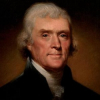
Thomas Jefferson
Thomas Jeffersonwas an American Founding Father who was the principal author of the Declaration of Independence. He was elected the second Vice President of the United States, serving under John Adams and in 1800 was elected the third President. Jefferson was a proponent of democracy, republicanism, and individual rights, which motivated American colonists to break from Great Britain and form a new nation. He produced formative documents and decisions at both the state and national level...
NationalityAmerican
ProfessionUS President
Date of Birth13 April 1743
CityShadwell, VA
CountryUnited States of America
I join you, therefore, in sincere congratulations that this den of the priesthood is at length broken up, and that a Protestant Popedom is no longer to disgrace the American history and character
Offices are as acceptable here as elsewhere, and whenever a man has cast a longing eye on them, a rottenness begins in his conduct
Political interest [can] never be separated in the long run from moral right.
My only fear is that I may live too long. This would be a subject of dread to me.
In the legislature, the House of Representatives is chosen by less than half the people, and not at all in proportion to those who do choose. The Senate are still more disproportionate, and for long terms of irresponsibility. In the Executive, the Governor is entirely independent of the choice of the people, and of their control; his Council equally so, and at best but a fifth wheel to a wagon. In the Judiciary, the judges of the highest courts are dependent on none but themselves.
The evils of war are great in their endurance, and have a long reckoning for ages to come.
It is true that in the meantime we are suffering deeply in spirit, and incurring the horrors of a war and long oppressions of enormous public debt.
If your letters are as long as the bible, they will appear short to me. Only let them be brim full of affection.
Long accustomed to the use of European manufactures, [the Cherokee Indians] are as incapable of returning to their habits of skinsand furs as we are, and find their wants the less tolerable as they are occasioned by a war [the American Revolution] the event of which is scarcely interesting to them.
[If] the nature of ... government [were] a subordination of the civil to the ecclesiastical power, I [would] consider it as desperate for long years to come. Their steady habits [will] exclude the advances of information, and they [will] seem exactly where they [have always been]. And there [the] clergy will always keep them if they can. [They] will follow the bark of liberty only by the help of a tow-rope.
I am ever unwilling that [peace] should be disturbed as long as the rights and interests of the nations can be preserved. But whensoever hostile aggressions on these require a resort to war, we must meet our duty and convince the world that we are just friends and brave enemies.
My religious reading has long been confined to the moral branch of religion, which is the same in all religions; while in that branch which consists of dogmas, all differ[.
There is a fulness of time when men should go, and not occupy too long the ground to which others have a right to advance.
My confidence is that there will for a long time be virtue and good sense enough in our countrymen to correct abuses.