Thomas Jefferson
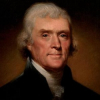
Thomas Jefferson
Thomas Jeffersonwas an American Founding Father who was the principal author of the Declaration of Independence. He was elected the second Vice President of the United States, serving under John Adams and in 1800 was elected the third President. Jefferson was a proponent of democracy, republicanism, and individual rights, which motivated American colonists to break from Great Britain and form a new nation. He produced formative documents and decisions at both the state and national level...
NationalityAmerican
ProfessionUS President
Date of Birth13 April 1743
CityShadwell, VA
CountryUnited States of America
Among the sayings and discourses imputed to him (i.e. Jesus) by his biographers, I find many passages of fine imagination, correct morality, and of the most lovely benevolence; and others again of so much ignorance, so much absurdity, so much untruth, charlatanism, and imposture, as to pronounce it impossible that such contradictions should have proceeded from the same being.
preach, my dear Sir, a crusade against ignorance; establish & improve the law for educating the common people.
We are destined to be a barrier against the return of ignorance and barbarism. Old Europe will have to lean on our shoulders, and to hobble along by our side, under the monkish trammels of priests and kings, as she can. What a colossus shall we be when the southern continent comes up to our mark! What a stand will it seem as a ralliance for the reason and freedom of the globe!
I am sorry they began their deliberations by so abominable a precedent as that of tying up the tongues of their members. Nothing can justify this example but the innocence of their intentions and ignorance of the value of public discussions. I have no doubt that all their other measures will be good and wise. It is really an assembly of demigods.
Ignorance is a poor tool in a battle of wits.
Old heads as well as young may sometimes be charged with ignorance and presumption. The natural course of the human mind is certainly from credulity to skepticism.
Our [Virginia's] act for freedom of religion is extremely applauded. The Ambassadors and ministers of the several nations of Europe resident at this court have asked me copies of it to send to their sovereigns, and it is inserted at full length in several books now in the press; among others, in the new Encyclopédie. I think it will produce considerable good even in those countries where ignorance, superstition, poverty and oppression of body and mind in every form, are so firmly settled on the mass of the people, that their redemption from them can never be hoped.
If ignorance is bliss, why aren't more people happy?
Both of our political parties, at least the honest portion of them, agree conscientiously in the same object: the public good; but they differ essentially in what they deem the means of promoting that good. One side believes it best done by one composition of the governing powers, the other by a different one. One fears most the ignorance of the people; the other the selfishness of rulers independent of them. Which is right, time and experience will prove.
A cold-blooded, calculation, unprincipled, usurper, without a virtue, no statesman, knowing nothing of commerce, political economy, or civil government, and supplying ignorance by bold presumption.
Ignorance of the law is no excuse in any country. If it were, the laws would lose their effect, because it can always be pretended.
If the children are untaught, their ignorance and vices will in future life cost us much dearer in their consequences than it would have done in their correction by a good education.
History, I believe, furnishes no example of a priest-ridden people maintaining a free civil government. This marks the lowest grade of ignorance of which their civil as well as religious leaders will always avail themselves for their own purposes.
Religious leaders will always avail themselves of public ignorance for their own purpose.