Thomas Carlyle
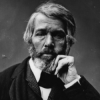
Thomas Carlyle
Thomas Carlylewas a Scottish philosopher, satirical writer, essayist, historian and teacher. Considered one of the most important social commentators of his time, he presented many lectures during his lifetime with certain acclaim in the Victorian era. One of those conferences resulted in his famous work On Heroes, Hero-Worship, and The Heroic in History where he explains that the key role in history lies in the actions of the "Great Man", claiming that "History is nothing but the biography of the...
NationalityScottish
ProfessionPhilosopher
Date of Birth4 December 1795
O thou who art able to write a Book, which once in the two centuries or oftener there is a man gifted to do, envy not him whom they name City-builder, and inexpressibly pity him whom they name Conqueror or City-burner! Thou too art a Conqueror and Victor; but of the true sort, namely over the Devil: thou too hast built what will outlast all marble and metal, and be a wonder-bringing City of the Mind, a Temple and Seminary and Prophetic Mount, whereto all kindreds of the Earth will pilgrim.
In every man's writings, the character of the writer must lie recorded.
Considering the multitude of mortals that handle the pen in these days, and can mostly spell, and write without glaring violations of grammar, the question naturally arises: How is it, then, that no work proceeds from them, bearing any stamp of authenticity and permanence; of worth for more than one day?
O thou who art able to write a book which once in the two centuries or oftener there is a man gifted to do, envy not him whom they name city-builder, and inexpressibly pity him whom they name conqueror or city-burner.
There is a great discovery still to be made in literature, that of paying literary men by the quantity they do not write.
He who would write heroic poems should make his whole life a heroic poem.
Oblivion is the dark page, whereon Memory writes her light-beam characters, and makes them legible; were it all light, nothing could be read there, any more than if it were all darkness.
The best effect of any book is that it excites the reader to self activity.
Writing is a dreadful labor, yet not so dreadful as Idleness.
In books lies the soul of the whole past time.
The greatest of faults, I should say, is to be conscious of none.
For, if a good speaker, never so eloquent, does not see into the fact, and is not speaking the truth of that - is there a more horrid kind of object in creation?
Men do less than they ought, unless they do all that they can.
This world, after all our science and sciences, is still a miracle wonderful, inscrutable, magical and more, to whosoever will think of it.