Tariq Ramadan
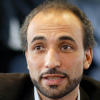
Tariq Ramadan
Tariq Ramadanis a Swiss academic, philosopher and writer. He is the professor of Contemporary Islamic Studies in the Faculty of Oriental Studies at St Antony's College, Oxford and also teaches at the Oxford Faculty of Theology. He is a visiting professor at the Faculty of Islamic Studies, the Université Mundiapolisand several other universities around world. He is also a senior research fellow at Doshisha University. He is the director of the Research Centre of Islamic Legislation and Ethics, based in...
NationalitySwiss
ProfessionWriter
Date of Birth26 August 1962
CountrySwitzerland
I'm not talking about reforming #Islam..it is to reform the #Muslim minds & the Muslim understandings of the texts.
There is no faith, without a critical mind
We have to free the Muslim mind from the obsession with limits and rules and forgetting the path and objective. This is truly a liberating process, and for me this is Islam: liberation from the ego, and in this case liberating ourselves from the wrong understanding of the religion.
Your heart is the center of humility, your mind could be the source of arrogance.
Very often when I see people who are perceived to be, or who call themselves progressives, sometimes I see an imbalance. Yes I understand the courage in their mind but I don't see the spirituality in their heart, good you are questioning the limits, but what about yourself, are you also liberating yourself?
When you're overwhelmed by your emotion, you listen less and you judge more. This is also the reality of the dogmatic mind.
Islam doesn't need reform, we need to reform the Muslim mind.
Fear and its accompanying emotional reactions have become part of the public mindset. Such reactions, while often legitimate, are also being exploited with increasing frequency for political ends.
We've got to get away from the idea that scholars in the Islamic world can do our thinking for us. We need to start thinking for ourselves.
We all cherish freedom of speech, but with a reasonable approach and a reasonable use of it. If we come to this, it is a debate. If not, then it is a power struggle. Who is going to win, the Muslim principles or the Western principles?
Many U.S. organizations believe that I am being barred from the country not because of my actions but because of my ideas. The conclusion seems inescapable.
The 'army camp' that coordinates the agencies of our brain is vulnerable, both in itself and from within. In effect, he who can know and master its functioning and psychology from outside can become twice its master.
Instantaneous and mass communication is the mother of mass naivety. Should we then lose hope? Is there any hope? But to lose hope is as dangerous as to nurture false hope. Where then can we find hope that is responsible?
The young people who join extremist groups are clearly suffering from massive deficiencies in religious knowledge and are often politically gullible (when they are not attempting to salve pangs of conscience by cutting themselves off from a life of delinquency).