Siri Hustvedt
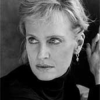
Siri Hustvedt
Siri Hustvedtis an American novelist and essayist. Hustvedt is the author of a book of poetry, six novels, two books of essays, and several works of non-fiction. Her books include: The Blindfold, The Enchantment of Lily Dahl, What I Loved, for which she is best known, A Plea for Eros, The Sorrows of an American, The Shaking Woman or A History of My Nerves, The Summer Without Men, Living, Thinking, Looking, and The Blazing World. What I Loved and The...
NationalityAmerican
ProfessionNovelist
Date of Birth19 February 1955
CityNorthfield, MN
CountryUnited States of America
The English expression 'to fall asleep' is apt because the transition between waking and sleeping is a gradual drop from one state of being into another: a giving up of full self-consciousness for unconsciousness or for the altered consciousness of dreams.
People who grow up with two or more languages understand that each can express certain aspects of reality better than the other.
With almost no exceptions, art by men is much more expensive than art by women. Even great women artists, like Louise Bourgeois and Lee Krasner, are only fully embraced very late in their career.
Every time I finish a book, I say to an imaginary god that I do not believe in, 'Please let me live to write another one.'
Even in fiction, I feel rigorous honesty applies. It doesn't apply to facts; it applies to what I think of as not telling emotional lies, which is a funny business.
We live in a culture that is much happier talking about organic brain disease than about psychic illness because the former suggests that something that is physically wrong in a brain is wholly unrelated to that person's upbringing or experiences in the world, but that is not necessarily true.
Both depression and anxiety disorders, for example, are repeatedly described in the media as 'chemical imbalances in the brain,' as if spontaneous neural events with no relation to anything outside a person's brain cause depression and anxiety.
Being a mother is complicated because it's not just a paternal culture making demands on you; it's those internal demands and expectations that women have and are self-generated.
Writers are in control of editing processes - making a sentence better, cutting out a paragraph. But the initial outpouring has very little to do with conscious control or manipulation.
We all live in a culture that is continually isolating feminine and masculine aspects, even when they're not related to people.
I have found that all of my memories seem to need a place and that a good part of what we think of as explicit memory has to do with location.
I'd been writing poems for many years, but most of them I didn't like. Then, when I was 23, I wrote one I did like, sent it to 'The Paris Review' - the highest publication I could think of - and they accepted it. No other moment in my literary life has quite come close to that.
I am always suspicious of those who impose 'rules' on child rearing. Every child is different in terms of temperament and learning, and every parent responds to a particular child, not some generalized infant or youngster.
Most of us accept that although we may believe our dreams to be real events, upon waking, we can tell the difference between nocturnal hallucinations and reality.