Samuel Taylor Coleridge
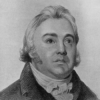
Samuel Taylor Coleridge
Samuel Taylor Coleridgewas an English poet, literary critic and philosopher who, with his friend William Wordsworth, was a founder of the Romantic Movement in England and a member of the Lake Poets. He wrote the poems The Rime of the Ancient Mariner and Kubla Khan, as well as the major prose work Biographia Literaria. His critical work, especially on Shakespeare, was highly influential, and he helped introduce German idealist philosophy to English-speaking culture. Coleridge coined many familiar words and phrases,...
NationalityEnglish
ProfessionPoet
Date of Birth21 October 1772
In what way, or by what manner of working, God changes a soul from evil to good, how He impregnates the barren rock--the priceless gems and gold--is to the human mind an impenetrable mystery, in all cases alike.
Alone, Alone, all, all alone, Alone on a wide wide sea! And never saint took pity on My soul in agony
All powerful souls have kindred with each other
Finally, good sense is the body of poetic genius, fancy its drapery, motion its life, and imagination the soul that is everywhere and in each; and forms all into one graceful and intelligent whole.
Truths ... are too often considered as so true, that they lose all the power of truth, and lie bed-ridden in the dormitory of the soul, side by side with the most despised and exploded errors.
Mr. Mum's Rudesheimer And the church of St. Geryon Are the two things alone That deserve to be known In the body-and-soul-stinking town of Cologne.
And what if all of animated nature Be but organic harps diversely framed, That tremble into thought, as o'er them sweeps, Plastic and vast, one intellectual breeze, At once the soul of each, and God of all?
The poet is the man made to solve the riddle of the universe who brings the whole soul of man into activity.
O pure of heart! Thou needest not ask of me what this strong music in the soul may be!
What is an epigram? A dwarfish whole, its body brevity, and wit its soul.
He who is best prepared can best serve his moment of inspiration.
Our own heart, and not other men's opinions form our true honor.
In politics, what begins in fear usually ends in failure.
Either we have an immortal soul, or we have not. If we have not, we are beasts,--the first and the wisest of beasts, it may be, but still true beasts. We shall only differ in degree and not in kind,--just as the elephant differs from the slug. But by the concession of the materialists of all the schools, or almost all, we are not of the same kind as beasts, and this also we say from our own consciousness. Therefore, methinks, it must be the possession of the soul within us that makes the difference.