Samuel Johnson
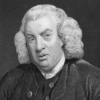
Samuel Johnson
Samuel Johnson, often referred to as Dr Johnson, was an English writer who made lasting contributions to English literature as a poet, essayist, moralist, literary critic, biographer, editor and lexicographer. Johnson was a devout Anglican and committed Tory, and has been described as "arguably the most distinguished man of letters in English history". He is also the subject of "the most famous single biographical work in the whole of literature," James Boswell's Life of Samuel Johnson...
NationalityEnglish
ProfessionNon-Fiction Author
Date of Birth18 September 1709
Friendship is a union of spirits, a marriage of hearts, and the bond there of virtue
Wickedness is always easier than virtue, for it takes a short cut to everything.
Every man prefers virtue, when there is not some strong incitement to transgress its precepts.
Virtue is too often merely local.
The highest panegyric, therefore, that private virtue can receive, is the praise of servants.
It is to be steadily inculcated, that virtue is the highest proof of understanding, and the only solid basis of greatness.
To set the mind above the appetites is the end of abstinence, which if not a virtue, is the groundwork of a virtue.
No people can be great who have ceased to be virtuous.
His virtues walked their narrow round, Nor made a pause, nor left a void; And sure the Eternal Master found The single talent well employed.
He who would govern his actions by the laws of virtue must regulate his thoughts by those of reason.
Glory, the casual gift of thoughtless crowds! Glory, the bribe of avaricious virtue!
What signifies protesting so against flattery! when a person speaks well of one, it must either be true or false, you know; if true, let us rejoice in his good opinion; if he lies, it is a proof at least that he loves more to please me, than to sit s
To act from pure benevolence is not possible for finite human beings, Human benevolence is mingled with vanity, interest, or some other motive.
With regard to the sharpest and most melting sorrow, that which arises from the loss of those whom we have loved with tenderness, it may be observed, that friendship between mortals can be contracted on no other terms than that one must some time mou