Samuel Johnson
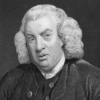
Samuel Johnson
Samuel Johnson, often referred to as Dr Johnson, was an English writer who made lasting contributions to English literature as a poet, essayist, moralist, literary critic, biographer, editor and lexicographer. Johnson was a devout Anglican and committed Tory, and has been described as "arguably the most distinguished man of letters in English history". He is also the subject of "the most famous single biographical work in the whole of literature," James Boswell's Life of Samuel Johnson...
NationalityEnglish
ProfessionNon-Fiction Author
Date of Birth18 September 1709
Many things difficult in design prove easy in performance.
Much mischief is done in the world with very little interest or design.
They whose activity of imagination is often shifting the scenes of expectation, are frequently subject to such sallies of caprice as make all their actions fortuitous, destroy the value of their friendship, obstruct the efficacy of their virtues, and set them below the meanest of those who persist in their resolutions, execute what they design, and perform what they have promised.
Many things difficult to design prove easy to performance.
Man is a transitory being, and his designs must partake of the imperfections their author.
None of the projects or designs which exercise the mind of man are equally subject to obstructions and disappointments with the pursuit of fame.
Complaints are vain; we will try to. do better another time. To-morrow and to-morrow. A few designs and a few failures, and the time of designing is past.
It is not difficult to conceive, however, that for many reasons a man writes much better than he lives. For without entering into refined speculations, it may be shown much easier to design than to perform. A man proposes his schemes of life in a state of abstraction and disengagement, exempt from the enticements of hope, the solicitations of affection, the importunities of appetite, or the depressions of fear.
The history of mankind is little else than a narrative of designs which have failed and hopes that have been disappointed.
What signifies protesting so against flattery! when a person speaks well of one, it must either be true or false, you know; if true, let us rejoice in his good opinion; if he lies, it is a proof at least that he loves more to please me, than to sit s
To act from pure benevolence is not possible for finite human beings, Human benevolence is mingled with vanity, interest, or some other motive.
With regard to the sharpest and most melting sorrow, that which arises from the loss of those whom we have loved with tenderness, it may be observed, that friendship between mortals can be contracted on no other terms than that one must some time mou
Every quotation contributes something to the stability or enlargement of the language.
Beauty has often overpowered the resolutions of the firm, and the reasonings of the wise, roused the old to sensibility, and subdued the rigorous to softness