Robert Pinsky
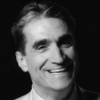
Robert Pinsky
Robert Pinskyis an American poet, essayist, literary critic, and translator. From 1997 to 2000, he served as Poet Laureate Consultant in Poetry to the Library of Congress. Pinsky is the author of nineteen books, most of which are collections of his poetry. His published work also includes critically acclaimed translations, including The Inferno of Dante Alighieri and The Separate Notebooks by Czesław Miłosz. He teaches at Boston University...
NationalityAmerican
ProfessionPoet
Date of Birth20 October 1940
CityLong Branch, NJ
CountryUnited States of America
The poetry I love is written with someone's voice and I believe its proper culmination is to be read with someone's voice. And the human voice in that sense is not electronically reproduced or amplified.
If a poem is written well, it was written with the poet's voice and for a voice. Reading a poem silently instead of saying a poem is like the difference between staring at sheet music and actually humming or playing the music on an instrument.
The medium of poetry is not words, the medium of poetry is not lines-it is the motion of air inside the human body, coming out through the chest and the voice box and through the mouth to shape sounds that have meaning. It's bodily.
Vivid and reflective, documentary and visionary, re-imagining the city of New York with the same urgency that ponders the opening words of Genesis, this is a passionate, artful and re-readable book.
'Write' is almost the wrong verb for what I do. I think 'compose' is more accurate because you're trying to make the sounds in your mind and in your voice. So I compose while I'm driving or in the shower.
I am a frustrated saxophone player. If I could, I would abandon all of my books, and I would trade it all if I could play the way people I admire play.
Poetry is not easy. Or should I say, real poetry is not easy.
Poetry is a vocal art for me - but not necessarily a performative one. It might be reading to oneself or recalling some lines by memory.
New Jersey is the most poetic state: close enough to New York to be urban and cosmopolitan, far enough to be desirous and unsure; densely populated, but full of farms and woods, with the most deer of any state.
When I was a teenager, just about the only thing I could do right was play music. In my graduating class, I was certainly not voted 'Most Literary Boy.' I can assure you I was not voted 'Mostly Likely to Succeed.' I was voted 'Most Musical Boy.' And the music led to the poetry.
I think my first experience of art, or the joy in making art, was playing the horn at some high-school dance or bar mitzvah or wedding, looking at a roomful of people moving their bodies around in time to what I was doing. There was a piano player, a bass player, a drummer, and my breath making the melody.
I think art is not an ornament or refinement at the fringes of human intelligence, I think it's at the center. It's at the core.
Jazz and poetry both involve a structure that may be familiar and to some extent predictable. And then, you try to create as much surprise and spontaneity and feeling and variation while respecting that structure.
When I was a kid, there was unhappiness in my family - was dealt with partly by escaping to television. And from a very early age, for whatever reason, I became scornful and resistant to and angry about that. And some other time in my life, I realized that there's a lot I loved in television.