Ralph Waldo Emerson
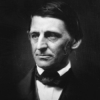
Ralph Waldo Emerson
Ralph Waldo Emerson, known professionally as Waldo Emerson, was an American essayist, lecturer, and poet who led the Transcendentalist movement of the mid-19th century. He was seen as a champion of individualism and a prescient critic of the countervailing pressures of society, and he disseminated his thoughts through dozens of published essays and more than 1,500 public lectures across the United States...
NationalityAmerican
ProfessionPoet
Date of Birth25 May 1803
CountryUnited States of America
The health of the eye seems to demand a horizon. We are never tired, so long as we can see far enough.
How beautiful to have the church always open, so that every tired wayfaring man may come in and be soothed by all that art can suggest of a better world when he is weary with this.
Life is in short cycles or periods; we are quickly tired, but we have rapid rallies. A man is spent by his work, starved, prostrate; he will not lift his hand to save his life; he can never think more. He sinks into deep sleep and wakes with renewed youth, with hope, courage, fertile in resources, and keen for daring adventure.
God said, I am tired of kings, I suffer them no more; Up to my ear this morning brings The outrage of the poor.
The best efforts of a fine person is felt after we have left their presence.
The best effect of fine persons is felt after we have left their presence
These times of ours are serious and full of calamity, but all times are essentially alike
Not in his goals but in his transitions is man great
A chief event in life is the day in which we have encountered a mind that startled us
In art the hand can never execute anything higher than the heart can inspire
Oh, tenderly the haughty day Fills his blue urn with fire
A ruddy drop of manly blood The surging sea outweighs; The world uncertain comes and goes, The lover rooted stays
The vegetable life does not content itself with casting from the flower or the tree a single seed, but it fills the air and earth with a prodigality of seeds, that, if thousands perish, thousands may plant themselves, that hundreds may come up, that tens may live to maturity; that, at least one may replace the parent.
The value of a principle is the number of things it will explain; and there is no good theory of disease which does not at once suggest a cure.