Ralph Waldo Emerson
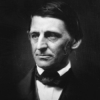
Ralph Waldo Emerson
Ralph Waldo Emerson, known professionally as Waldo Emerson, was an American essayist, lecturer, and poet who led the Transcendentalist movement of the mid-19th century. He was seen as a champion of individualism and a prescient critic of the countervailing pressures of society, and he disseminated his thoughts through dozens of published essays and more than 1,500 public lectures across the United States...
NationalityAmerican
ProfessionPoet
Date of Birth25 May 1803
CountryUnited States of America
Life consists in what a person is thinking of all day.
If a man sits down to think, he is immediately asked if has a headache.
What is the hardest thing in the world? To think.
A sect or party is an incognito devised to save man from the vexation of thinking.
A man's what he thinks about all day long
I suffer whenever I see that common sight of a parent or senior imposing his opinion and way of thinking and being on a young soul to which they are totally unfit. Cannot we let people be themselves, and enjoy life in their own way? You are trying to make that man another you. One's enough.
Research is not seeing what others do not see, it is seeing the same thing as other people and thinking what they do not.
What is the hardest task in the world? To think.
The ancestor of every action is a thought.
What I must do is all that concerns me, not what the people think.
Accept your genius and say what you think.
The learned and the studious of thought have no monopoly of wisdom. Their violence of direction in some degree disqualifies them to think truly.
The reason why any one refuses his assent to your opinion, or his aid to your benevolent design, is in you: he refuses to accept you as a bringer of truth, because, though you think you have it, he feels that you have it not. You have not given him the authentic sign.
There are many faculties in man, each of which takes its turn of activity, and that faculty which is paramount in any period and exerts itself through the strongest nation, determines the civility of that age: and each age thinks its own the perfection of reason.