Ralph Waldo Emerson
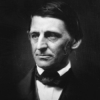
Ralph Waldo Emerson
Ralph Waldo Emerson, known professionally as Waldo Emerson, was an American essayist, lecturer, and poet who led the Transcendentalist movement of the mid-19th century. He was seen as a champion of individualism and a prescient critic of the countervailing pressures of society, and he disseminated his thoughts through dozens of published essays and more than 1,500 public lectures across the United States...
NationalityAmerican
ProfessionPoet
Date of Birth25 May 1803
CountryUnited States of America
When he is pushed, tormented, defeated, he has a chance to learn something; ... he learns his ignorance, is cured of the insanity of conceit; has got moderation and real skill.
It is a mischievous notion that we are come late into nature; that the world was finished a long time ago. As the world was plastic and fluid in the hands of God, so it is ever to so much of his attributes as we bring to it. To ignorance and sin, it is flint. They adapt to themselves to it as they may; but in proportion as a man has anything in him divine, the firmament flows before him and takes his signet and form.
There comes a time in each man's education in which he comes to the conclusion that envy is ignorance, imitation is suicide, and society in in conspiracy against each one of its members.
There are many things of which a wise man might wish to be ignorant
The terrors of the child are quite reasonable, and add to his loveliness; for his utter ignorance and weakness, and his enchanting indignation on such a small basis of capital compel every bystander to take his part.
Each is liable to panic, which is exactly, the terror of ignorance surrendered to the imagination. Knowledge is the encourager, knowledge that takes fear out of the heart, knowledge and use, which is knowledge in practice. They can conquer who believe they can. It is he who has done the deed once who does not shrink from attempting again.
Tell them dear, that if eyes were made for seeing, Then beauty is its own excuse for being: Why thou wert there, O rival of the rose! I never sought to ask, I never knew: But, in my simple ignorance suppose The selfsame power that brought me there brought you.
Envy is ignorance, Imitation is Suicide.
As we are, so we associate. The good, by affinity, seek the good; the vile, by affinity, the vile. Thus of their own volition, souls proceed into Heaven, into Hell.
A man builds a fine house; and now he has a master, and a task for life: he is to furnish, watch, show it, and keep it in repair, the rest of his days.
Wherever the invitation of men or your own occasions lead you, speak the very truth, as your life and conscience teach it, and cheer the waiting, fainting hearts of men with new hope and new revelation.
We have listened too long to the courtly Muses of Europe.
Preaching is the expression of the moral sentiment in application to the duties of life.
Man is priest, and scholar, and statesman, and producer, and soldier.