Peter Thiel
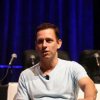
Peter Thiel
Peter Andreas Thielis a German-American entrepreneur, venture capitalist and hedge fund manager. Thiel co-founded PayPal with Max Levchin and Elon Musk and served as its CEO. He also co-founded Palantir, of which he is chairman. He was the first outside investor in Facebook, the popular social-networking site, with a 10.2% stake acquired in 2004 for $500,000, and sits on the company's board of directors...
NationalityAmerican
ProfessionEntrepreneur
Date of Birth11 October 1967
CountryUnited States of America
When parents have invested enormous amounts of money in their kids' education, to find their kids coming back to live with them - well, that was not what they bargained for.
If you borrowed money and went to a college where the education didn't create any value, that is potentially a really big mistake.
I had a good experience in college, but I don't think interdisciplinary education is something that's stressed very much at all. It's generally considered to be something of a bad idea.
Education is a bubble in a classic sense. To call something a bubble, it must be overpriced, and there must be an intense belief in it.
I think anything that requires real global breakthroughs requires a degree of intensity and sustained effort that cannot be done part time, so it's something you have to do around the clock, and that doesn't compute with our existing educational system.
When people use the word 'science,' it's often a tell, like in poker, that you're bluffing.
Every correct answer is necessarily a secret: something important and unknown, something hard to do but doable.
Facebook succeeded because it was about real people having a presence on the Internet. There were all these other social networking sites people had, but they were all about fictional people.
When I was starting out, I followed along the path that seemed to be marked out for me - from high school to college to law school to professional life.
The optimism that many felt in the 1960s over labour-saving technology is giving way to a fearful question: 'Will your labour be good for anything in the future? Or will you be replaced by a machine?'
I did not want to write just another business book.
Ideally, I want us to be working on things where if we're not working on them, they won't happen; companies where if we don't fund them they will not receive funding.
One of my first investments was $100,000 in a Web-based calendar startup - and I lost every dollar.
I would consider myself a rather staunch libertarian.