Noam Chomsky
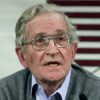
Noam Chomsky
Avram Noam Chomskyis an American linguist, philosopher, cognitive scientist, historian, logician, social critic, and political activist. Sometimes described as "the father of modern linguistics", Chomsky is also a major figure in analytic philosophy, and one of the founders of the field of cognitive science. He has spent more than half a century at the Massachusetts Institute of Technology, where he is Institute Professor Emeritus, and is the author of over 100 books on topics such as linguistics, war, politics, and...
NationalityAmerican
ProfessionTeacher
Date of Birth7 December 1928
CityPhiladelphia, PA
CountryUnited States of America
There has been a huge attack against private sector unions. Actually, that's been going on since the Second World War.
When General Allenby conquered Jerusalem during World War I, he was hailed in the American press as Richard the Lion-Hearted, who had at last won the Crusades and driven the pagans out of the Holy Land.
In general, I think, U.S. policies remain constant, going back to the Second World War. But the capacity to implement them is declining.
If you destroyed half the pharmaceutical production in the United States, we'd think it's a pretty serious problem. In fact, we'd probably go to war.
In November 2004, U.S. occupation forces launched their second major attack on the city of Falluja. The press reported major war crimes instantly, with approval.
Immediately after 11 September, the U.S. closed down the Somali charitable network Al-Barakaat on grounds that it was financing terror. This achievement was hailed one of the great successes of the 'war on terror.' In contrast, Washington's withdrawal of its charges as without merit a year later aroused little notice.
Concentration of executive power, unless it's very temporary and for specific circumstances, let's say fighting world war two, it's an assault on democracy.
The crime of liberation theology was that it takes the Gospels seriously. That's unacceptable. The Gospels are radical pacifist material, if you take a look at them . . . Liberation theology, in Brazil particularly, brought the actual Gospel to peasants. They said, let's read what the Gospels say, and try to act on the principles they describe. That was the major crime that set off the Reagan wars of terror.
We can, for example, be fairly confident that either there will be a world without war or there won't be a world - at least, a world inhabited by creatures other than bacteria and beetles, with some scattering of others.
Say the Pentagon Papers, - that material went much deeper. It went into internal government planning back for twenty - five years. Those are things that the public should have known about. In a democracy they should have known what leaders thinking and planning about major enterprises like the Vietnam war. It was kept secret from them.
Even in a largely depoliticized society such as the United States, with no political parties or opposition press beyond the narrow spectrum of the business-dominated consensus, it is possible for populate action to have a significant impact on policy, though indirectly. That was an important lesson for the Indochina Wars.
Industrial production of meat makes a huge contribution to global warming.
One of the problems of organizing in the North, in the rich countries, is that people tend to think - even the activists - that instant gratification is required. You constantly hear: 'Look I went to a demonstration, and we didn't stop the war so what's the use of doing it again?'
Why should Iran have a deterrent strategy? Well, it's surrounded by hostile enemies. Both of its borders have been under occupation by a hostile superpower, the United States, which is constantly violating the U.N. charter by leaving open what they call the saying, 'all options are open' - meaning the threat of war.