Noam Chomsky
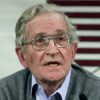
Noam Chomsky
Avram Noam Chomskyis an American linguist, philosopher, cognitive scientist, historian, logician, social critic, and political activist. Sometimes described as "the father of modern linguistics", Chomsky is also a major figure in analytic philosophy, and one of the founders of the field of cognitive science. He has spent more than half a century at the Massachusetts Institute of Technology, where he is Institute Professor Emeritus, and is the author of over 100 books on topics such as linguistics, war, politics, and...
NationalityAmerican
ProfessionTeacher
Date of Birth7 December 1928
CityPhiladelphia, PA
CountryUnited States of America
If there was an observer on Mars, they would probably be amazed that we have survived this long.
In the US, there is basically one party - the business party. It has two factions, called Democrats and Republicans, which are somewhat different but carry out variations on the same policies. By and large, I am opposed to those policies. As is most of the population.
In any case, it is better to have some deal than no deal, but it's interesting that Obama picked the day of implementing of Iran deal to impose new sanctions on North Korea.
The most interesting - in fact, inspiring - people I met there [Porto Alegre] are those who remain nameless: representatives of the international campesino movement, the East Timorese delegation,... - the usual heroes, who disappear, unknown, apart from the consequences of their work.
One of the most interesting reactions to come out of 1968 was in the first publication of the Trilateral Commission, which believed there was a 'crisis of democracy' from too much participation of the masses.
When you look at a corporation, just like when you look at a slave owner, you want to distinguish between the institution and the individual. So slavery, for example, or other forms of tyranny, are inherently monstrous. The individuals participating in them may be the nicest guys you can imagine.
Withdrawal of American troops must be a unilateral act, as the invasion of Vietnam by the American government was a unilateral act in the first place.
When Britain and the U.S. invaded Iraq, it was with the reasonable expectation that it was going to increase the threat of terror, as it has.
To say that the United States has pursued diplomacy with North Korea is a little bit misleading. It did under the Clinton administration, though neither side completely lived up to their obligations. Clinton didn't do what was promised, nor did North Korea, but they were making progress.
I don't think a Jewish or Christian or Islamic state is a proper concept. I would object to the United States as a Christian state.
U.S. analysts estimate that Russian military expenditures have tripled during the Bush-Putin years, in large measure a predicted reaction to the Bush administration's militancy and aggressiveness.
Even the most cynical can hardly be surprised by the antics of Nixon and his accomplices as they are gradually revealed. It matters little, at this point, where the exact truth lies in the maze of perjury, evasion, and of contempt for the normal - hardly inspiring - standards of political conduct.
The good news from the U.S. military survey of focus groups is that Iraqis do accept the Nuremberg principles. They understand that sectarian violence and the other postwar horrors are contained within the supreme international crime committed by the invaders.
The government argues that First Amendment rights are outweighed by the need to prosecute those who transmit classified information and documents.