Noam Chomsky
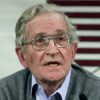
Noam Chomsky
Avram Noam Chomskyis an American linguist, philosopher, cognitive scientist, historian, logician, social critic, and political activist. Sometimes described as "the father of modern linguistics", Chomsky is also a major figure in analytic philosophy, and one of the founders of the field of cognitive science. He has spent more than half a century at the Massachusetts Institute of Technology, where he is Institute Professor Emeritus, and is the author of over 100 books on topics such as linguistics, war, politics, and...
NationalityAmerican
ProfessionTeacher
Date of Birth7 December 1928
CityPhiladelphia, PA
CountryUnited States of America
Long before the technology revolution there was declassification of documents and I've spent quite a lot of time studying declassified internal documents and written a lot about them. In fact, anybody who's worked through the declassified record can see very clearly that the reason for classification is very rarely to protect the state or the society from enemies. Most of the time it is to protect the state from its citizens, so they don't know what the government is doing.
Governments will use whatever technology is available to combat their primary enemy - their own population.
Neoliberal democracy. Instead of citizens, it produces consumers. Instead of communities, it produces shopping malls. The net result is an atomized society of disengaged individuals who feel demoralized and socially powerless. In sum, neoliberalism is the immediate and foremost enemy of genuine participatory democracy, not just in the United States but across the planet, and will be for the foreseeable future.
Non-violent resistance activities cannot succeed against an enemy that is able freely to use violence. That's pretty obvious. You can't have non-violent resistance against the Nazis in a concentration camp, to take an extreme case...
The prescription for endless war poses a far greater danger to Americans than perceived enemies do, for reasons the terrorist organisations understand very well.
When you look at a corporation, just like when you look at a slave owner, you want to distinguish between the institution and the individual. So slavery, for example, or other forms of tyranny, are inherently monstrous. The individuals participating in them may be the nicest guys you can imagine.
Withdrawal of American troops must be a unilateral act, as the invasion of Vietnam by the American government was a unilateral act in the first place.
When Britain and the U.S. invaded Iraq, it was with the reasonable expectation that it was going to increase the threat of terror, as it has.
To say that the United States has pursued diplomacy with North Korea is a little bit misleading. It did under the Clinton administration, though neither side completely lived up to their obligations. Clinton didn't do what was promised, nor did North Korea, but they were making progress.
I don't think a Jewish or Christian or Islamic state is a proper concept. I would object to the United States as a Christian state.
U.S. analysts estimate that Russian military expenditures have tripled during the Bush-Putin years, in large measure a predicted reaction to the Bush administration's militancy and aggressiveness.
Even the most cynical can hardly be surprised by the antics of Nixon and his accomplices as they are gradually revealed. It matters little, at this point, where the exact truth lies in the maze of perjury, evasion, and of contempt for the normal - hardly inspiring - standards of political conduct.
The good news from the U.S. military survey of focus groups is that Iraqis do accept the Nuremberg principles. They understand that sectarian violence and the other postwar horrors are contained within the supreme international crime committed by the invaders.
The government argues that First Amendment rights are outweighed by the need to prosecute those who transmit classified information and documents.