Mary Wollstonecraft
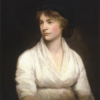
Mary Wollstonecraft
Mary Wollstonecraftwas an English writer, philosopher, and advocate of women's rights. During her brief career, she wrote novels, treatises, a travel narrative, a history of the French Revolution, a conduct book, and a children's book. Wollstonecraft is best known for A Vindication of the Rights of Woman, in which she argues that women are not naturally inferior to men, but appear to be only because they lack education. She suggests that both men and women should be treated as rational...
NationalityBritish
ProfessionWriter
Date of Birth27 April 1759
If the abstract rights of man will bear discussion and explanation, those of women, by a parity of reasoning, will not shrink from the same test.
Children, I grant, should be innocent; but when the epithet is applied to men, or women, it is but a civil term for weakness.
It is vain to expect virtue from women till they are in some degree independent of men.
Taught from infancy that beauty is woman's sceptre, the mind shapes itself to the body, and roaming round its gilt cage, only seeks to adorn its prison.
Make women rational creatures, and free citizens, and they will quickly become good wives; - that is, if men do not neglect the duties of husbands and fathers.
Strengthen the female mind by enlarging it, and there will be an end to blind obedience.
Women ought to have representatives, instead of being arbitrarily governed without any direct share allowed them in the deliberations of government.
Taught from their infancy that beauty is woman's sceptre, the mind shapes itself to the body, and, roaming round its gilt cage, only seeks to adorn its prison. Men have various employments and pursuits which engage their attention, and give a character to the opening mind; but women, confined to one, and having their thoughts constantly directed to the most insignificant part of themselves, seldom extend their views beyond the triumph of the hour.
Women are systematically degraded by receiving the trivial attentions which men think it manly to pay to the sex, when, in fact, men are insultingly supporting their own superiority.
I do not wish women to have power over men; but over themselves.
No man chooses evil because it is evil; he only mistakes it for happiness.
Nothing contributes so much to tranquilizing the mind as a steady purpose - a point on which the soul may fix its intellectual eye.
No man chooses evil because it is evil; he only mistakes it for happiness, the good he seeks.
I love my man as my fellow; but his scepter, real, or usurped, extends not to me, unless the reason of an individual demands my homage; and even then the submission is to reason, and not to man.