Margaret Atwood
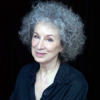
Margaret Atwood
Margaret Eleanor Atwood, CC OOnt FRSCis a Canadian poet, novelist, literary critic, essayist, and environmental activist. She is a winner of the Arthur C. Clarke Award and Prince of Asturias Award for Literature, has been shortlisted for the Booker Prize five times, winning once, and has been a finalist for the Governor General's Award several times, winning twice. In 2001, she was inducted into Canada's Walk of Fame. She is also a founder of the Writers' Trust of Canada, a...
NationalityCanadian
ProfessionPoet
Date of Birth18 November 1939
CityOttawa, Canada
CountryCanada
I grew up in the north woods of Canada. You had to know certain things about survival. Wilderness survival courses weren't very formalized when I was growing up, but I was taught certain things about what to do if I got lost in the woods.
He’d developed a strangely tender feeling towards such words, as if they were children abandoned in the woods and it was his duty to rescue them.
Don’t sit down in the middle of the woods. If you’re lost in the plot or blocked, retrace your steps to where you went wrong. Then take the other road. And/or change the person. Change the tense. Change the opening page.
The Orange prize has been pivotal in the careers of many women writers - it's given them that extra push, and that extra dollop of confidence.
She even had a kind of special position among men: she was an exception, she fitted none of the categories they commonly used when talking about girls; she wasn't a cock-teaser, a cold fish, an easy lay or a sneaky bitch; she was an honorary person. She had grown to share their contempt for most women.
I think of this as a democratizing device.
People are now familiar with this kind of interaction. They may even have a more intimate moment that way.
Just think of it as a very, very long pen.
In the desert there is no sign that says, Thou shalt not eat stones.
When you're writing a novel, you don't want the reader to come out of it voting yes or no to some question. Life is more complicated than that. Reality simply consists of different points of view.
Reading and writing are connected. I learned to read very early so I could read the comics, which I then started to draw.
. . . time is compressed like the fist I close on my knee. . . . I hold inside it the clues and solutions and the power for what I must do now.
He's very in depth, on the dark side. He's interested in structure and how things work. After reading his books you can't just be a tourist in those places, only seeing the sunny side.
If I pick up a book with spaceships on the cover, I want spaceships. If I see one with dragons, I want there to be dragons inside the book. Proper labeling. Ethical labeling. I don't want to open up my cornflakes and find that they're full of pebbles... You need to respect the reader enough not to call it something it isn't.