Maimonides
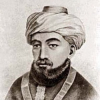
Maimonides
Moshe ben Maimon, or Mūsā ibn Maymūn, acronymed Rambam, and GraecizedMoses Maimonides, a preeminent medieval Sephardic Jewish philosopher and astronomer, became one of the most prolific and influential Torah scholars and physicians of the Middle Ages. Born in Cordova, Almoravid Empireon Passover Eve, 1135 or 1138, he died in Egypt on December 12, 1204, whence his body was taken to the lower Galilee and buried in Tiberias. He worked as a rabbi, physician, and philosopher in Morocco and Egypt...
NationalitySpanish
ProfessionPhilosopher
Date of Birth30 March 1135
CountrySpain
First Theory . There is no Providence at all for anything in the Universe; all parts of the Universe, the heavens and what they contain, owe their origin to accident and chance; there exists no being that rules and governs them or provides for them. This is the theory of Epicurus ...
The third class of evils comprise those which everyone causes to himself by his own action. This is the largest class, and is far more numerous than the second class. It is especially of these evils that all men complain, - only few men are found that do not sin against themselves by this kind of evil. ...This class of evil originates in man's vices, such as excessive desire for eating, drinking, and love; indulgence in these things in undue measure, or in improper manner, or partaking of bad food. This course brings diseases and afflictions upon the body and soul alike.
The more we desire for that which is superfluous, the more we meet with difficulties; our strength and possessions are spent in unnecessary things, and are wanting when required for that which is necessary.
In so far as the soul is a force residing in the body; it has therefore been said that the properties of the soul depend of the condition of the body.
At times the truth shines so brilliantly that we perceive it as clear as day. Our nature and habit then draw a veil over our perception, and we return to a darkness almost as dense as before. We are like those who, though beholding frequent flashes of lightning, still find themselves in the thickest darkness of the night.
In finances, be strict with yourself, generous with others.
The Prophets even express their surprise that God should take notice of man, who is too little and too unimportant to be worthy of the attention of the Creator; how, then, should other living creatures be considered as proper objects for Divine Providence!
The so-called evils are evils only in relation to a certain thing, and that which is evil in relation to a certain existing thing, either includes the non-existence of that thing or the non-existence of some of its good conditions.
It is man's duty to love and to fear God, even without hope of reward or fear of punishment.
While one man can discover a certain thing by himself, another is never able to understand it, even if taught by means of all possible expressions and metaphors, and during a long period; his mind can in no way grasp it, his capacity is insufficient for it.
The error of the ignorant goes so far as to say that God's power is insufficient, because he has given to this Universe the properties which they imagine cause these great evils, and which do not help all evil-disposed persons to obtain the evil which they seek, and to bring their evil souls to the aim of their desires, though these, as we have shown, are really without limit.
Even when a person suffers pain in consequence of a thorn having entered into his hand, although it is at once drawn out, it is a punishment that has been inflicted on him, and the least pleasure he enjoys is a reward; all this is meted out by strict justice; as is said in the Scripture, "all His ways are judgement" (Deut. xxxii. 4); we are only ignorant of the working of that judgement.
Anticipate charity by preventing poverty; assist the reduced fellow man, either by a considerable gift or a sum of money or by teaching him a trade or by putting him in the way of business so that he may earn an honest livelihood and not be forced to the dreadful alternative of holding out his hand for charity. This is the highest step and summit of charity's golden ladder.
Medical practice is not knitting and weaving and the labor of the hands, but it must be inspired with soul and be filled with understanding and equipped with the gift of keen observation . . .