Ludwig Wittgenstein
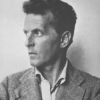
Ludwig Wittgenstein
Ludwig Josef Johann Wittgensteinwas an Austrian-British philosopher who worked primarily in logic, the philosophy of mathematics, the philosophy of mind, and the philosophy of language. From 1929 to 1947, Wittgenstein taught at the University of Cambridge. During his lifetime he published just one slim book, the 75-page Tractatus Logico-Philosophicus, one article, one book review and a children's dictionary. His voluminous manuscripts were edited and published posthumously. Philosophical Investigations appeared as a book in 1953, and has since come to be...
NationalityAustrian
ProfessionPhilosopher
Date of Birth26 April 1889
CityVienna, Austria
CountryAustria
My attitude towards him is an attitude towards a soul. I am not of the opinion that he has a soul. . . .
You must always be puzzled by mental illness. The thing I would dread most, if I became mentally ill, would be your adopting a common sense attitude; that you could take it for granted that I was deluded.
If life becomes hard to bear we think of a change in our circumstances. But the most important and effective change, a change in our own attitude, hardly even occurs to us, and the resolution to take such a step is very difficult for us.
I think I summed up my attitude to philosophy when I said: philosophy ought really to be written only as a poetic composition.
Not every religion has to have St. Augustine's attitude to sex. Why even in our culture marriages are celebrated in a church, everyone present knows what is going to happen that night, but that doesn't prevent it being a religious ceremony.
What can be said at all can be said clearly; and whereof one cannot speak thereof one must be silent
The mystical is not how the world is, but that it is
A new word is like a fresh seed sewn on the ground of the discussion.
Perhaps what is inexpressible (what I find mysterious and am not able to express) is the background against which whatever I could express has its meaning.
It seems to me that, in every culture, I come across a chapter headed ''Wisdom.'' And then I know exactly what is going to follow: ''Vanity of vanities, all is vanity.''
For an answer which cannot be expressed the question too cannotbe expressed. The riddle does not exist. If a question can beput at all, then it can also be answered.
If people did not sometimes do silly things, nothing intelligent would ever get done
If you do know that here is one hand, we'll grant you all the rest.
Vanity of vanities, all is vanity.