Leon Panetta
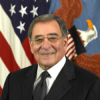
Leon Panetta
Leon Edward Panettais an American statesman, lawyer, and professor. He served in the Obama administration as Director of the Central Intelligence Agency from 2009 to 2011, and as Secretary of Defense from 2011 to 2013. A Democrat, Panetta was a member of the United States House of Representatives from 1977 to 1993, served as Director of the Office of Management and Budget from 1993 to 1994, and as President Bill Clinton's Chief of Staff from 1994 to 1997. He is...
NationalityAmerican
ProfessionPolitician
Date of Birth28 June 1938
CityMonterey, CA
CountryUnited States of America
On the Democratic side, it's an uphill battle for anyone who runs. I don't think it's a slam dunk at all. Schwarzenegger has huge name identity, and that counts for a lot.
You have to have a good relationship with the president, but you also have to be a tough SOB to get things done. And that means not only being tough with the staff, but, occasionally, tough with the president.
Both sides of the spectrum are really going to use the opportunity provided by Katrina to really begin to test some ideas that they otherwise couldn't test.
The public does not translate the deficit into something that really bites them. We are going to have to get public support for action on the deficit.
One of the things that has made Iraq such a tragedy is you've got the administration, which is kind of locked into its view; you've got Congress, which is scrambling all over the place; and politics, which has invaded this issue on all sides. The good thing here is we can stand back and assess this.
None of this is being paid for. At some point, all of that borrowing comes back to haunt you.
I was at the White House at that time. We were concerned that when the president vetoed these things, he would bear responsibility for the shutdown. But Congress in the end became the vocal point for public anger. And that could be the case with this Congress as well.
If these are baseless charges, it'll be OK. On the other hand, if there's something there, and it leads to him having to step out of office, it may be time to do some repair work and that may not have the consequences you would expect,
I have a sense they have basically allowed the vice president to run his own show in the White House, and for whatever reason, the vice president is not accountable to the rest of the White House or to the president. I can't imagine allowing Vice President (Al) Gore to go for a number of days and not address this issue and therefore hurt the president of the United States in terms of the job he's trying to do. The first priority in the White House is not the vice president. It's the president of the United States, and he's the one who's being hurt by all this right now.
My conclusion is that at this late date, it's just not realistic to expect that I could put together an effective campaign,
I think they're facing the largest challenge I've seen in recent history, in terms of an administration having to decide whether they continue to borrow and spend, or whether they face up to very difficult choices that have to be made to discipline the budget. I think we'll find out in the next few months what that decision is going to be.
I think the most important thing for this president to do is to focus on trying to get some things done -- limited things done -- over these next 100 days, ... If he can get education reform accomplished, if he could do something on campaign reform in a bipartisan way, then that could send a very important signal to the American people that he's going to try to get things done.
That confrontation, I think, clearly was in the minds of those who were sitting down at the table,
Over the last 10 or 15 years, there's almost been a deliberate strategy to push all the tough decisions to the very end of a Congress, with the hope that you can ram them through as members try to get away for the holidays.