Karen Mills
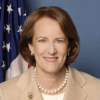
Karen Mills
Karen Gordon Millsserved as the 23rd Administrator of the U.S. Small Business Administration. She was nominated by President-elect Barack Obama on December 19, 2008, confirmed unanimously by the Senate on April 2, 2009, and sworn in on April 6, 2009. During her tenure, her office was elevated to the rank of Cabinet-level officer, expanding her power on policy decisions and granting her access to cabinet meetings. On February 11, 2013 she announced resignation as Administrator and left the post on...
NationalityAmerican
ProfessionPublic Servant
Date of Birth14 September 1953
CountryUnited States of America
I recently had the opportunity to participate in Inc.'s first-ever 'Hire Power Awards' event in Washington, D.C. The event was a testament to the power of American entrepreneurship and the role that it plays in driving job creation and innovation in a wide array of industries.
I think we've learned that the S.B.A. plays a critical role in providing access and opportunity when the market is not providing that access. We help banks get that money out into the hands of important and viable businesses, particularly those owned by minorities, women, immigrants and veterans.
The 2009 stimulus law got the ball rolling, allowing the agency to reduce and eliminate fees and raise loan guarantees to 90 percent of the total. I knew that we had the opportunity to use S.B.A. products to fill that gap in a rapid manner, as we ended up doing in the Recovery Act.
It's not government that creates jobs; it's small business. Our job is to make sure they have the access to capital, the access to contracting opportunities, and the help, advice and mentoring that they need to go out and be successful.
I recently had the opportunity to participate in 'Inc.''s first-ever 'Hire Power Awards' event in Washington, D.C. The event was a testament to the power of American entrepreneurship and the role that it plays in driving job creation and innovation in a wide array of industries.
I think we've learned that the S.B.A. plays a critical role in providing access and opportunity when the market is not providing that access. We help banks get that money out into the hands of important and viable businesses, particularly those owned by minorities, women, immigrants and veterans.
Small businesses pay 18 percent more than big businesses for health care, the same health care, just because they're small and they have too small a pool of risk.
We spend a great deal of our energy making sure that small businesses have help in navigating to the outcomes that they want.
The S.B.A. does not lend directly to businesses, but instead backs loans to encourage banks to invest in small businesses as part of a nearly $90 billion portfolio.
This is not a zero-sum game. We know that if we provide access and education, particularly where there are gaps in the market, we will create more jobs, we will create more growth, and we will create more activity in the U.S. market, which will be good for our economy.
As I've traveled around the country, it has surprised me how many times I've heard people in small businesses use that word 'saved.' I believe many small businesses would not have had access to credit and would not have survived without the $50 billion that we were able to put into the market.
One of the most important things we hear is the S.B.A. needs to be ubiquitous. We do all these things, but people still don't know.
If you want to have prosperity here, we really have to see our small businesses able to grow and compete around the world.
We really accomplished what we set out to do with the Recovery Act programs, which was to fill the lending gap created by the crisis.