John Ruskin
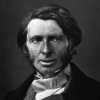
John Ruskin
John Ruskinwas the leading English art critic of the Victorian era, also an art patron, draughtsman, watercolourist, a prominent social thinker and philanthropist. He wrote on subjects as varied as geology, architecture, myth, ornithology, literature, education, botany and political economy. His writing styles and literary forms were equally varied. Ruskin penned essays and treatises, poetry and lectures, travel guides and manuals, letters and even a fairy tale. The elaborate style that characterised his earliest writing on art was later superseded...
NationalityEnglish
ProfessionWriter
Date of Birth8 February 1819
What right have you to take the word wealth, which originally meant ''well-being,'' and degrade and narrow it by confining it to certain sorts of material objects measured by money.
What right have you to take the word wealth, which originally meant well-being, and degrade and narrow it by confining it to certain sorts of material objects measured by money.
Why is one man richer than another? Because he is more industrious, more persevering and more sagacious.
That which seems to be wealth may in verity be only the gilded index of far reaching ruin
I desire ... to leave this one great fact clearly stated. THERE IS NO WEALTH BUT LIFE.
Inequalities of wealth, unjustly established, have assuredly injured the nation in which they exist during their establishment; and, unjustly directed, they injure it yet more during their existence. But inequalities of wealth justly established, benefit the nation in the course of their establishment; and, nobly used, aid it yet more by their existence.
There is no wealth but life.
Every great man is always being helped by everybody; for his gift is to get good out of all things and all persons.
The purest and most thoughtful minds are those which love color the most.
There is nothing in the world that some man cannot make a little worse and sell a little cheaper, and he who considers price only is that man's lawful prey.
Poetry is the suggestion, by the imagination, of noble grounds for the noble emotions
I believe the first test of a truly great man is humility
I look upon those pitiful concretions of lime and clay which spring up, in mildewed forwardness, out of the kneaded fields about our capital... not merely with the careless disgust of an offended eye, not merely with sorrow for a desecrated landscape, but with a painful foreboding that the roots of our national greatness must be deeply cankered when they are thus loosely struck in their native ground. The crowded tenements of a struggling and restless population differ only from the tents of the Arab or the Gipsy by their less healthy openness to the air of heaven, and less happy choice of their spot of earth; by their sacrifice of liberty without the gain of rest, and of stability without the luxury of change.
Life without industry is guilt, and industry without art is brutality