John Buford
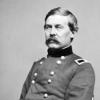
John Buford
John Buford, Jr.was a Union cavalry officer during the American Civil War. A West Point regular, born in the divided border state of Kentucky, he had many Southern connections, but opted to stay in the Union Army. His first command was a cavalry brigade under Major General John Pope, and he distinguished himself at Second Bull Run, where he was wounded, and also saw action at Antietam and Chancellorsville...
NationalityAmerican
ProfessionSoldier
Date of Birth4 March 1826
CountryUnited States of America
I can do nothing with the enemy save observe him.
The enemy was too strong for me, but he was severely punished for his obstinacy. His casualties were more than quadruple mine.
The inhabitants knew of my arrival and the position of the enemy camp, yet not one of them gave me a particle of information.
Shortly after this, I placed my command on our extreme left, to watch and fight the enemy should he make another attack, and went to Cemetary Hill for observation.
We entered Gettysburg in the afternoon, just in time to meet the enemy entering the town, and in good season to drive him back before his getting a foothold.
Within forty eight hours the concentration of both armies will take place on a field within view and a great battle will be fought.
There is so much apathy... that I wish to be relieved from the Army of the Potomac.
I am disgusted and worn out with the system that seems to prevail.
Found everybody in a terrible state of excitement on account of the enemy's advance upon this place.
The people give and sell the men something to eat, but I can't stand that way of subsisting; it causes dreadful straggling.
Had any of them given me timely information and acted as a guide that night, I could have surprised and captured this (Rebel) force.
General: I attempted to take Williamsport yesterday, but found too large a force of infantry and artillery. After a long fight, I withdrew to this place.
I have not been able to get any grain yet. It is all in the country, and the people talk instead of working.
During the whole campaign, from June 27 to July 31, there has been no shirking or hesitation, to tiring on the part of a single man so far as I have seen; the brigade commanders reported none.