J. R. R. Tolkien
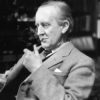
J. R. R. Tolkien
John Ronald Reuel Tolkien CBE, FRSL, known by his pen name J. R. R. Tolkien, was an English writer, poet, philologist, and university professor who is best known as the author of the classic high-fantasy works The Hobbit, The Lord of the Rings, and The Silmarillion...
NationalityEnglish
ProfessionNovelist
Date of Birth3 January 1892
fair fall flower frost house knew lady looked perceived sap saw seemed soon speak standing straight turned white wrought
For she is a fair maiden, fairest lady of a house of queens. And yet I know not how I should speak of her. When I first looked on her and perceived her unhappiness, it seemed to me that I saw a white flower standing straight and proud, shapely as a lily, and yet knew that it was hard, as if wrought by elf-wrights out of steel. Or was it, maybe, a frost that had turned its sap to ice, and so it stood, bitter-sweet, still fair to see, but stricken, soon to fall and die?
taken men fairy
Supernatural is a dangerous and difficult word in any of its senses, looser or stricter. But to fairies it can hardly be applied, unless super is taken merely as a superlative prefix. For it is man who is, in contrast to fairies, supernatural; whereas they are natural, far more natural than he. Such is their doom.
stars sea fairy-stories
The realm of fairy-story is wide and deep and high and filled with many things: all manner of beasts and birds are found there; shoreless seas and stars uncounted; beauty that is an enchantment, and an ever-present peril; both joy and sorrow as sharp as swords.
children fairy-stories play
the association of children and fairy-stories is an accident of our domestic history. Fairy-stories have in the modern lettered world been relegated to the “nursery,” as shabby or old-fashioned furniture is relegated to the play-room, primarily because the adults do not want it, and do not mind if it is misused.
gone fairs
deep they delved us, fair they wrought us, high they builded us; but they are gone.
christian lost-love fairy-stories
The Resurrection was the greatest ‘eucatastrophe’ possible in the greatest Fairy Story — and produces that essential emotion: Christian joy which produces tears because it is qualitatively so like sorrow, because it comes from those places where Joy and Sorrow are at one, reconciled, as selfishness and altruism are lost in Love.
allegory attempt dislike fairytale myth
I dislike Allegory - the conscious and intentional allegory - yet any attempt to explain the purport of myth or fairytale must use allegorical language.
bend lord share
There is only one Lord of the Ring, only one who can bend it to his will. And he does not share power.
bloom days east forgotten green herself laid last leaves life men rest spring until utterly
There at last when the mallorn leaves were falling, but spring had not yet come, she laid herself to rest upon Cerin Amroth; and there is her green grave, until the world is changed, and all the days of her life are utterly forgotten by men that come after, and elanor and niphredil bloom no more east of the Sea.
art contain elements form known moral myth primary reflect religious truth
Myth and fairy-story must, as all art, reflect and contain in solution elements of moral and religious truth (or error), but not explicit, not in the known form of the primary 'real' world.
almost begin corner detailed english exciting fall far field middle notions personal pieces received seem soon turns
Middle English is an exciting field - almost uncharted, I begin to think, because as soon as one turns detailed personal attention on to any little corner of it, the received notions and ideas seem to crumple up and fall to pieces - as far as language goes, at any rate.
I never liked Hans Christian Andersen because I knew he was always getting at me.
costs indeed unlimited written
They say it is the first step that costs the effort. I do not find it so. I am sure I could write unlimited 'first chapters'. I have indeed written many.
disliked exactly far indeed languages later liked longer men nearer plain relationship spite spoke
It is plain indeed that in spite of later estrangement Hobbits are relatives of ours: far nearer to us than Elves, or even than Dwarves. Of old they spoke the languages of Men, after their own fashion, and liked and disliked much the same things as Men did. But what exactly our relationship is can no longer be discovered.