Herbie Hancock
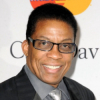
Herbie Hancock
Herbert Jeffrey "Herbie" Hancockis an American pianist, keyboardist, bandleader, composer and actor. Starting his career with Donald Byrd, he shortly thereafter joined the Miles Davis Quintet where Hancock helped to redefine the role of a jazz rhythm section and was one of the primary architects of the post-bop sound. He was one of the first jazz musicians to embrace synthesizers and funk music. Hancock's music is often melodic and accessible; he has had many songs "cross over" and achieved success...
NationalityAmerican
ProfessionPianist
Date of Birth12 April 1940
CityChicago, IL
CountryUnited States of America
The result is a music that allows us to all go outside the pigeonholes the music business forces us to stay in. We're breaking down expectations, walking the tightrope, while not scaring our fan bases away.
When I sense a more conservative and limiting attitude coming from musicians, than my impression is that they're really moving away from the true spirit of jazz.
This was put together not just as a series of notes and chords. If I depended on what anyone else thinks, I never would have stretched and discovered the various dimensions of myself.
Everything has focused on what the technology is capable of doing and making tools and then taking human beings and saying, what can you do with that.
Even the things that are on the Plugged Nickel set. I don't know how we did some of that.
Because I have certain things I feel very passionate about, and I don't want to just make albums with tunes anymore.
As the 1960s began, jazz music was still at an apex, with hard bop groups led by the likes of Miles Davis and John Coltrane remaining a force on the musical landscape.
Aside from that, what was more in our heads when we made the new album is the concept of forging through and exploring new territory and encouraging other musicians to not be afraid to explore new territory.
We've been looking at machines for so long, I really wish the technology community would look at human beings first for a change, let's balance the thing out.
Tradition can be negative though, if the importance of having roots outweighs the importance of searching for what's valuable in new things being presented.
You asked me before about being an innovator and I mentioned that I've always been some kind of leader.
But once Miles would start to play on top of these things we were doing, all of a sudden, it was as though he would go to the core of it.
We talked for a couple of hours before we played a note. We didn't talk about music, we talked about life - families, children, issues in the world, politics, so many things. The kind of camaraderie we developed helped make the music what it is. I wanted to find a common ground and connect as people first.
We were listening to a lot of different people, but we were listening to a lot of real innovators, and we were full of ideas.