Henry A. Kissinger
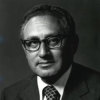
Henry A. Kissinger
Henry Alfred Kissingeris an American diplomat and political scientist. He served as National Security Advisor and later concurrently as United States Secretary of State in the administrations of presidents Richard Nixon and Gerald Ford. For his actions negotiating the ceasefire in Vietnam, Kissinger received the 1973 Nobel Peace Prize under controversial circumstances, with two members of the committee resigning in protest. Kissinger later sought, unsuccessfully, to return the prize. After his term, his advice has been sought by world leaders...
NationalityGerman
ProfessionStatesman
Date of Birth27 May 1923
CountryGermany
Far too often, the Ukrainian issue is posed as a showdown: whether Ukraine joins the East or the West. But if Ukraine is to survive and thrive, it must not be either side's outpost against the other - it should function as a bridge between them.
A leader who confines his role to his people's experience dooms himself to stagnation; a leader who outstrips his people's experience runs the risk of not being understood.
It is, after all, the responsibility of the expert to operate the familiar and that of the leader to transcend it.
No one will ever win the battle of the sexes; there's too much fraternizing with the enemy.
A leader does not deserve the name unless he is willing occasionally to stand alone.
I want to get into the President's head some idea of what he can do. If military actions are recommended to him for decision, I want him to know what he is doing when he decides.
Congress can't do much more damage to us than they already have. To this extent we're liberated to do what is right. ... Our successors will be living in a nightmare if we don't do what is right.
an occasion to blow off their frustrations on an issue on which they didn't look as if they are begging (the United States) for help.
a review of withdrawal strategy ... seems in order.
My heart goes out to the president because I've served in an administration that faced a very divided country in a very difficult set of circumstances.
Because of the axiom that guerrillas win if they do not lose, stalemate is unacceptable, ... the military challenge in Iraq is more elusive.
Ninety percent of all politicians give the other ten percent a bad reputation.
I'm confident John Bolton will bring peace to the world before he brings peace to his relations with The New York Times,
We will go where the facts lead us,