Henry A. Kissinger
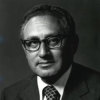
Henry A. Kissinger
Henry Alfred Kissingeris an American diplomat and political scientist. He served as National Security Advisor and later concurrently as United States Secretary of State in the administrations of presidents Richard Nixon and Gerald Ford. For his actions negotiating the ceasefire in Vietnam, Kissinger received the 1973 Nobel Peace Prize under controversial circumstances, with two members of the committee resigning in protest. Kissinger later sought, unsuccessfully, to return the prize. After his term, his advice has been sought by world leaders...
NationalityGerman
ProfessionStatesman
Date of Birth27 May 1923
CountryGermany
Committees are consumers and sometimes sterilizers of ideas, rarely creators of them.
The idea of abstract power only exists for academics, not in real life.
Nothing is more urgent than a serious, dare I say compassionate, debate as to where we are going at home and abroad. Technicians cannot master revolutions; every great achievement was an idea before it became a reality. Cathedrals cannot be built by those who are paralyzed by doubt or consumed by cynicism. If a society loses the capacity for great conception, it can be administered but not governed.
The Western concept of democracy is based on the idea that the loser of an election has the possibility next time round of being the winner. But in the case of an ethnically or religiously divided country, in which minorities don't live peacefully together, this necessary balance can't be properly guaranteed by democracy. When each ethnic group arms itself, it is not surprising that the army of a new state is viewed by part of the population as an ideological militia.
I want to get into the President's head some idea of what he can do. If military actions are recommended to him for decision, I want him to know what he is doing when he decides.
Congress can't do much more damage to us than they already have. To this extent we're liberated to do what is right. ... Our successors will be living in a nightmare if we don't do what is right.
an occasion to blow off their frustrations on an issue on which they didn't look as if they are begging (the United States) for help.
a review of withdrawal strategy ... seems in order.
My heart goes out to the president because I've served in an administration that faced a very divided country in a very difficult set of circumstances.
Because of the axiom that guerrillas win if they do not lose, stalemate is unacceptable, ... the military challenge in Iraq is more elusive.
Ninety percent of all politicians give the other ten percent a bad reputation.
I'm confident John Bolton will bring peace to the world before he brings peace to his relations with The New York Times,
We will go where the facts lead us,
If you don't know where you are going, every road will get you nowhere.