Harold Bloom
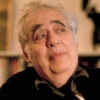
Harold Bloom
Harold Bloomis an American literary critic and Sterling Professor of Humanities at Yale University. Since the publication of his first book in 1959, Bloom has written more than 20 books of literary criticism, several books discussing religion, and a novel. He has edited hundreds of anthologies concerning numerous literary and philosophical figures for the Chelsea House publishing firm. Bloom's books have been translated into more than 40 languages...
NationalityAmerican
ProfessionTeacher
Date of Birth11 July 1930
CountryUnited States of America
We read deeply for varied reasons, most of them familiar: that we cannot know enough people profoundly enough; that we need to know ourselves better; that we require knowledge, not just of self and others, but of the way things are. Yet the strongest, most authentic motive for deep reading…is the search for a difficult pleasure.
The true use of Shakespeare or of Cervantes, of Homer or of Dante, of Chaucer or of Rabelais, is to augment one's own growing inner self. . . . The mind's dialogue with itself is not primarily a social reality. All that the Western Canon can bring one is the proper use of one's own solitude, that solitude whose final form is one's confrontation with one's own mortality.
I have read all of Daniel Aaron's books, and admired them, but in The Americanist I believe he has composed an intellectual and social memoir for which he will be remembered. His self-portrait is marked by personal tact and admirable restraint: he is and is not its subject. The Americanist is a vision of otherness: literary and academic friends and acquaintances, here and abroad. Eloquently phrased and free of nostalgia, it catches a lost world that yet engendered much of our own.
It is by extending oneself, by exercising some capacity previously unused that you come to a better knowledge of your own potential.
I think that's not reading because there's nothing there to be read,
I saw the Oxford English Dictionary there for the first time.
He is a great artist. He may be the finest artist among American writers since William Faulkner and Henry James. There's the endless variety of modes he works in. His style, his stance, his point of view.
If they wish to alleviate the sufferings of the exploited classes, let them live up to their pretensions, let them abandon the academy and go out there and work politically and economically and in a humanitarian spirit.
What we call a poem is mostly what is not there on the page. The strength of any poem is the poems that it has managed to exclude.
If I were to sum up the negative reactions to my work, I think there are two primary causes: one is that if there is discourse about anxiety it is necessarily going to induce anxiety. It will represent a return of the repressed for a great many people.
I'm talking in the millions. I can't tell you one, two, three or 10. I'm just saying that it's in the millions.
I realized early on that the academy and the literary world alike -- and I don't think there really is a distinction between the two -- are always dominated by fools, knaves, charlatans and bureaucrats. And that being the case, any human being, male or female, of whatever status, who has a voice of her or his own, is not going to be liked.
Real reading is a lonely activity.
I think Freud is about contamination, but I think that is something he learned from Shakespeare, because Shakespeare is about nothing but contamination, you might say.