George Santayana
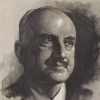
George Santayana
Jorge Agustín Nicolás Ruiz de Santayana y Borrás, known in English as George Santayana, was a philosopher, essayist, poet, and novelist. Originally from Spain, Santayana was raised and educated in the United States from the age of eight and identified himself as an American, although he always kept a valid Spanish passport. He wrote in English and is generally considered an American man of letters. At the age of forty-eight, Santayana left his position at Harvard and returned to Europe...
NationalitySpanish
ProfessionPhilosopher
Date of Birth16 December 1863
CityMadrid, Spain
CountrySpain
Fanaticism consists of redoubling your efforts when you have forgotten your aim
Fanaticism consists in redoubling your effort when you have forgotten your aim.
Prayer, among sane people, has never superseded practical efforts to secure the desired end.
Fanaticism consists of redoubling your effort when you have forgotten your aim.
Prayer is not a substitute for work; it is an effort to work further and be efficient beyond the range of one's powers.
The effort of art is to keep what is interesting in existence, to recreate it in the eternal.
Even the most inspired verse, which boasts not without a relative justification to be immortal, becomes in the course of ages a scarcely legible hieroglyphic; the language it was written in dies, a learned education and an imaginative effort are requisite to catch even a vestige of its original force. Nothing is so irrevocable as mind.
To be interested in the changing seasons is, in this middling zone, a happier state of mind than to be hopelessly in love with spring.
All thought is naught but a footnote to Plato.
Knowledge is recognition of something absent; it is a salutation, not an embrace.
Man is as full of potentiality as he is of impotence
Love makes us poets, and the approach of death should makes us philosophers
Love is only half the illusion; the lover, but not his love, is deceived.
Let a man once overcome his selfish terror at his own finitude, and his finitude is, in one sense, overcome