Flannery O'Connor
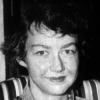
Flannery O'Connor
Mary Flannery O'Connorwas an American writer and essayist. An important voice in American literature, she wrote two novels and 32 short stories, as well as a number of reviews and commentaries. She was a Southern writer who often wrote in a Southern Gothic style and relied heavily on regional settings and grotesque characters. Her writing also reflected her own Roman Catholic faith and frequently examined questions of morality and ethics. Her posthumously-compiled Complete Stories won the 1972 U.S. National Book...
NationalityAmerican
ProfessionNovelist
Date of Birth25 March 1925
CitySavannah, GA
CountryUnited States of America
There may never be anything new to say, but there is always a new way to say it, and since, in art, the way of saying a thing becomes a part of what is said, every work of art is unique and requires fresh attention.
No art is sunk in the self, but rather, in art the self becomes self-forgetful in order to meet the demands of the thing seen and the thing being made.
The basis of art is truth, both in matter and in mode.
Art never responds to the wish to make it democratic; it is not for everybody; it is only for those who are willing to undergo the effort needed to understand it.
The artist uses his reason to discover an answering reason in everything he sees.
Art transcends its limitations only by staying within them.
It is the business of the artist to uncover the strangeness of truth
The two worst sins of bad taste in fiction are pornography and sentimentality. One is too much sex and the other too much sentiment.
Go warn the children of God of the terrible speed of mercy,
Even in the life of a Christian, faith rises and falls like the tides of an invisible sea. It's there, even when he can't see it or feel it, if he wants it to be there. You realize, I think, that it is more valuable, more mysterious, altogether more immense than anything you can learn or decide upon It will keep you free - not free to do anything you please, but free to be formed by something larger than your own intellect or the intellects around you.
I feel that discussing story-writing in terms of plot, character, and theme is like trying to describe the expression on a face by saying where the eyes, nose, and mouth are.
It is popular to believe that in order to see clearly one must believe nothing. This may work well enough if you are observing cells under a microscope. It will not work if you are writing fiction. For the fiction writer, to believe nothing is to see nothing.
There is a question whether faith can or is supposed to be emotionally satisfying. I must say that the thought of everyone lolling about in an emotionally satisfying faith is repugnant to me. I believe that we are ultimately directed Godward but that this journey is often impeded by emotion
Either practice restraint or be prepared for crowding