Ernst Mach
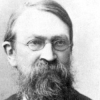
Ernst Mach
Ernst Waldfried Josef Wenzel Machwas an Austrian physicist and philosopher, noted for his contributions to physics such as study of shock waves. Quotient of one's speed to that of sound is named the Mach number in his honor. As a philosopher of science, he was a major influence on logical positivism, American pragmatism and through his criticism of Newton, a forerunner of Einstein's relativity...
NationalityAustrian
ProfessionScientist
Date of Birth18 February 1838
CountryAustria
Ordinarily pleasure and pain are regarded as different from sensations.
A movement that we will to execute is never more than a represented movement, and appears in a different domain from that of the executed movement, which always takes place when the image is vivid enough.
When I recall today my early youth, I should take the boy that I then was, with the exception of a few individual features, for a different person, were it not for the existence of the chain of memories.
The very gradual character of the changes of the body also contributes to the stability of the ego, but in a much less degree than people imagine.
Strange as it may seem, the power of mathematics rests on its evasion of all unnecessary thought, and on its wonderful saving of mental operations.
The theory of relativity is just as unacceptable to me as, say, the existence of the atom or other such dogmas.
In the long run we shall not be able to close our eyes to this simple truth, which is the immediate outcome of psychological analysis.
In fact, sensations of pleasure and pain, however faint they may be, really constitute an essential part of the content of all so-called emotions.
The philosophical point of view of the average man - if that term may be applied to his naive realism - has a claim to the highest consideration.
Thus the great gulf between physical and psychological research persists only when we acquiesce in our habitual stereotyped conceptions.
The popular notion of an antithesis between appearance and reality has exercised a very powerful influence on scientific and philosophical thought.
I once knew an otherwise excellent teacher who compelled his students to perform all their demonstrations with incorrect figures, on the theory that it was the logical connection of the concepts, not the figure, that was essential.
Personally, people know themselves very poorly.
Similarly, many a young man, hearing for the first time of the refraction of stellar light, has thought that doubt was cast on the whole of astronomy, whereas nothing is required but an easily effected and unimportant correction to put everything right again.