Elizabeth Cady Stanton
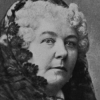
Elizabeth Cady Stanton
Elizabeth Cady Stantonwas an American suffragist, social activist, abolitionist, and leading figure of the early women's rights movement. Her Declaration of Sentiments, presented at the Seneca Falls Convention held in 1848 in Seneca Falls, New York, is often credited with initiating the first organized women's rights and women's suffrage movements in the United States. Stanton was president of the National Woman Suffrage Association from 1892 until 1900...
NationalityAmerican
ProfessionActivist
Date of Birth12 November 1815
CountryUnited States of America
Social science affirms that a woman's place in society marks the level of civilization.
All men & women are created equal
If the Bible teaches the equality of women, why does the church refuse to ordain women to preach the gospel, to fill the offices of deacons and elders, and to administer the Sacraments...?
Woman's degradation is in mans idea of his sexual rights. Our religion, laws, customs, are all founded on the belief that woman was made for man.
Our 'pathway' is straight to the ballot box, with no variableness nor shadow of turning.
To think that all in me of which my father would have felt proper pride had I been a man, is deeply mortifying to him because I am a woman.
I would have girls regard themselves not as adjectives but as nouns.
We hold these truths to be self-evident: that all men and women are created equal.
[On women's role in the home:] Every wife, mother and housekeeper feels at present that there is some screw loose in the household situation.
The greatest block today in the way of woman's emancipation is the church, the canon law, the Bible and the priesthood.
To make laws that man cannot, and will not obey, serves to bring all law into contempt.
When lions paint pictures men will not always be represented as conquerors. When women translate laws, constitutions, bibles and philosophies, man will not always be the declared heard of the church, the state, and the home.
... women learned one important lesson--namely, that it is impossible for the best of men to understand women's feelings or the humiliation of their position. When they asked us to be silent on our question during the War, and labor for the emancipation of the slave, we did so, and gave five years to his emancipation and enfranchisement.... I was convinced, at the time, that it was the true policy. I am now equally sure that it was a blunder.
Did I not feel that the time has come for the questions of women's wrongs to be laid before the public? Did I not believe that women herself must do this work, for women alone understand the height, the depth, the breadth of her degradation. - Seneca Falls Convention, 1848