Edward Hirsch
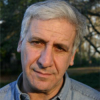
Edward Hirsch
Edward Hirschis an American poet and critic who wrote a national bestseller about reading poetry. He has published nine books of poems, including The Living Fire: New and Selected Poems, which brings together thirty-five years of work, and Gabriel: A Poem, a book-length elegy for his son that The New Yorker calls “a masterpiece of sorrow.” He has also published five prose books about poetry. He is president of the John Simon Guggenheim Memorial Foundation in New York City...
NationalityAmerican
ProfessionPoet
Date of Birth20 January 1950
CountryUnited States of America
Life has to have the plenitude of art.
I think ancient cultures incorporated death into the experience of life in a more natural way than we have done. In our obsessive focus on youth, on celebrity, our denial of death makes it harder for people who are grieving to find a place for that grief.
I'm a poet, and I spent my life in poetry.
Each book should be an entity unto itself, with its own structure, character, life, name.
It's absolutely crucial to maintain my life as a poet.
You're trying to write about something that's sacred. You're trying to bring the seriousness of life and death to it, and you're trying to find a way to dramatize it, and you're trying to give language to it, which is inadequate. But it's important to try.
When I was young, I wrote everything, and I thought I would be an all around writer, that I would write everything.
There have always been great defenses of poetry, and I've tried to write mine, and I think all of my work and criticism is a defense of poetry to try and keep something alive in poetry.
There are a lot of poems where I am questing for God. I don't think there is any finding of God.
One of the things that distinguishes poetry from ordinary speech is that in a very few number of words, poetry captures some kind of deep feeling, and rhythm is the way to get there. Rhythm is the way the poetry carries itself.
My cultural experiences were as important to my formation as many of the other things that happened to me.
Poets have always celebrated grief as one of the deepest human emotions.
Poetry takes place in time. It is a durational. Things take place in sequence.
Poetry takes courage because you have to face things and you try to articulate how you feel.