Edith Wharton
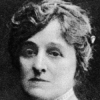
Edith Wharton
Edith Whartonwas a Pulitzer Prize-winning American novelist, short story writer, and designer. She was nominated for the Nobel Prize in Literature in 1927, 1928 and 1930. Wharton combined her insider's view of America's privileged classes with a brilliant, natural wit to write humorous, incisive novels and short stories of social and psychological insight. She was well acquainted with many of her era's other literary and public figures, including Theodore Roosevelt...
NationalityAmerican
ProfessionNovelist
Date of Birth24 January 1862
CityNew York City, NY
CountryUnited States of America
The visible world is a daily miracle for those who have eyes and ears; and I still warm hands thankfully at the old fire, though every year it is fed with the dry wood of more old memories.
The very good people did not convince me; I felt they'd never been tempted. But you knew; you understood; you felt the world outside tugging at one with all its golden hands - and you hated the things it asked of one; you hated happiness bought by disloyalty and cruelty and indifference. That was what I'd never known before - and it's better than anything I've known.
I want to put my hand out and touch you. I want to do for you and care for you. I want to be there when you're sick and when you're lonesome.
It seemed to him that the tie between husband and wife, even if breakable in prosperity, should be indissoluble in misfortune.
The mere idea of a woman's appealing to her family to screen her husband's business dishonour was inadmisible, since it was the one thing that the Family, as an institution, could not do.
Everything about her was both vigorous and exquisite.
They seemed to come suddenly upon happiness as if they had surprised a butterfly in the winter woods
One can remain alive ... if one is unafraid of change, insatiable in intellectual curiosity interested in big things and happy in small ways.
It would presently be his task to take the bandage from this young woman's eyes, and bid her look forth on the world. But how many generations of the women who had gone to her making had descended bandaged to the family vault? He shivered a little, remembering some of the new ideas in his scientific books, and the much-cited instance of the Kentucky cave-fish, which had ceased to develop eyes because they had no use for them.
. . . an unalterable and unquestioned law of the musical world required that the German text of French operas sung by Swedish artists should be translated into Italian for the clearer understanding of English-speaking audiences.
If we'd stop trying to be happy we could have a pretty good time.
Nothing could more clearly give the measure of the distance that the world had travelled.
I feel that each case must be judged individually, on its own merits ... irrespective of stupid conventionalities... I mean, each woman's right to her liberty.
Almost everybody in the neighborhood had ''troubles,'' frankly localized and specified; but only the chosen had ''complications.'' To have them was in itself a distinction, though it was also, in most cases, a death warrant. People struggled on for years wit