David Suzuki
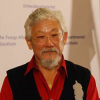
David Suzuki
David Takayoshi Suzuki, CC OBCis a Canadian academic, science broadcaster and environmental activist. Suzuki earned a Ph.D. in zoology from the University of Chicago in 1961, and was a professor in the genetics department at the University of British Columbia from 1963 until his retirement in 2001. Since the mid-1970s, Suzuki has been known for his television and radio series, documentaries and books about nature and the environment. He is best known as host of the popular and long-running CBC...
NationalityCanadian
ProfessionScientist
Date of Birth24 March 1936
CityVancouver, Canada
CountryCanada
Economics and a reliance on science and technology to solve our problems has led to an unsustainable situation where continued growth in consumption is required for governments and business to be considered successful. This is a form of insanity. Economics is at the heart of our destructive ways and our faith in it has blinded us
The terrible part of this looming catastrophe is that people have been working on solutions for years and have developed concrete steps to massively reduce our energy use, while stimulating whole new industries and technologies that are more efficient and affordable.
With the world's human population now at seven billion and growing, and the demand for technology and modern conveniences increasing, we can't control all our negative impacts. But we have to find better ways to live within the limits nature and its cycles impose.
Humans are now the most numerous mammal on the planet. There are more humans than rats or mice. Humans have a huge ecological footprint, magnified by their technology.
Scientists and supercomputers have amplified our ability to look ahead. For decades, experts have warned us that human numbers, technology, hyper-consumption and a global economy are altering the chemical, geological, and biological properties of the biosphere.
There are more humans than all of the rabbits on earth. There are more of us than all the wildebeests, than all the rats, than all the mice. We are the most numerous mammal on the planet. But because we're not like rabbits or rats or mice, we have technology, we have a consumptive appetite, we have a global economy.
The Canada we see in this report does not reflect the one we hold in our hearts,
They wouldn't run away when dogs were attacking them. They literally were hanging around the houses, and around the school, right in the downtown part of the community,
Provinces have let the federal government take all of the heat and all of the pressure about Kyoto, and they really have been sitting on their asses not doing anything,
It's time we stopped ignoring the environment, ... Let's not let another election go by without making this a high priority.
We're in a giant car heading towards a brick wall and everyones arguing over where they're going to sit
Our beliefs, our values shape the way we look out at the world and the way we treat it. If we believe that we were here, placed here by God, that this - all of this creation is for us, it's for us to go and occupy, dominate and exploit, then we will proceed to do that.
Although they [light and medium trucks] have only 5% of the transportation market..., they account for fully 35% of greenhouse gas emissions from freight transportation.
Canada, more than any nation, will be affected by rising sea levels from global warming.